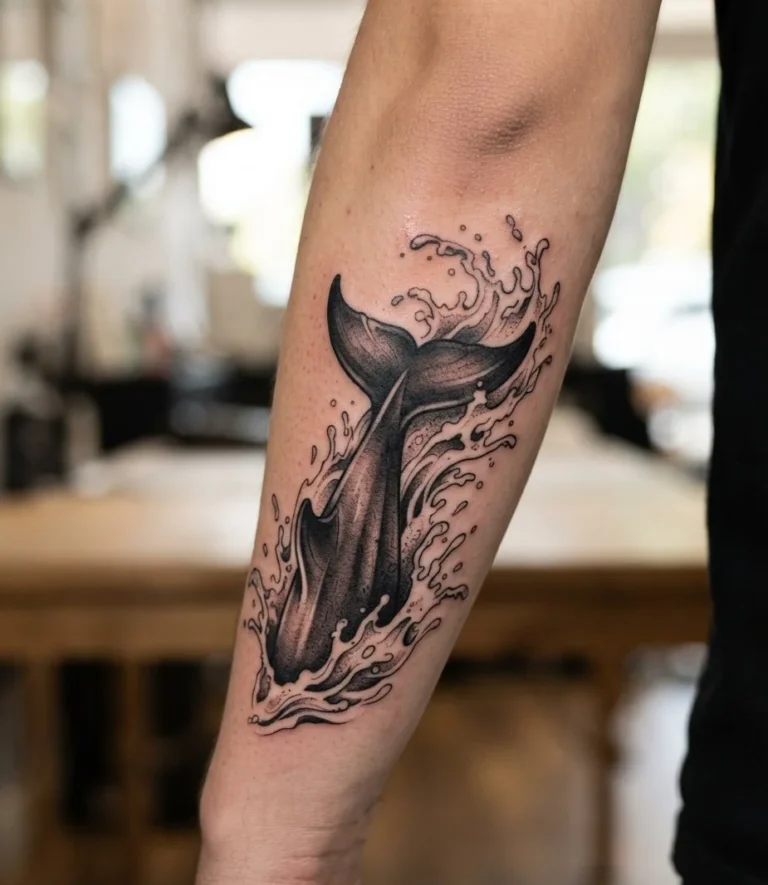
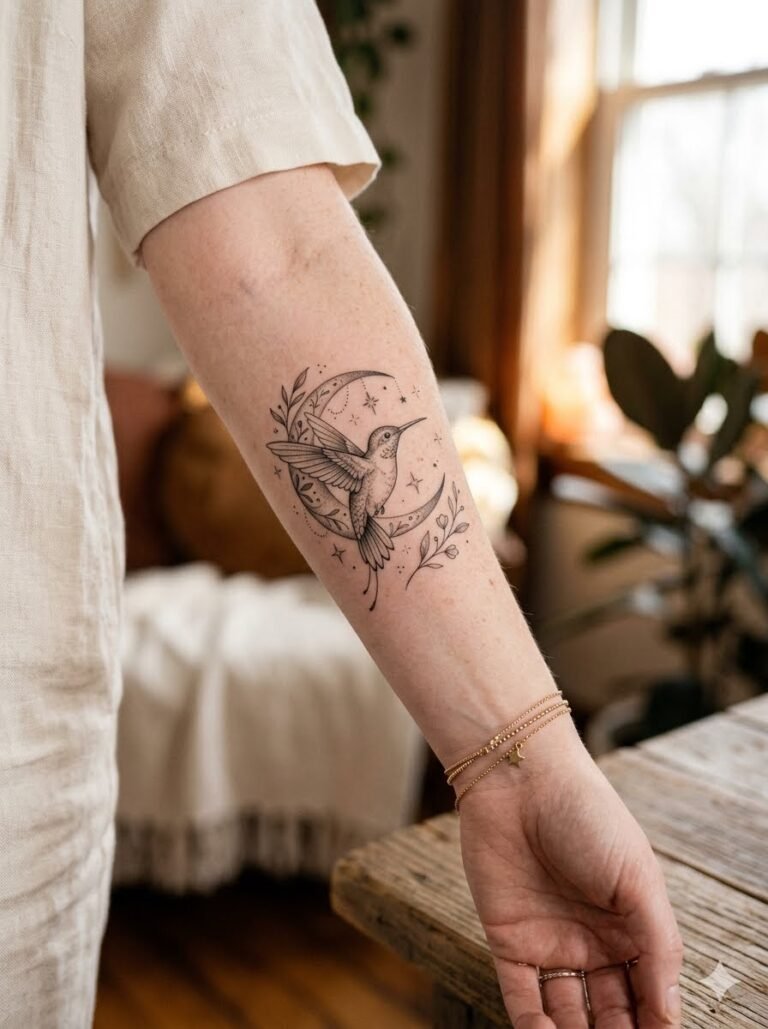
21 Spider Tattoo Ideas That Go Beyond the Jump-Scare Cliché
Most spider tattoos borrow the same handful of scary-movie clichés, black, hairy, hanging over your shoulder like a jump scare.
But spiders are actually one of the most visually and symbolically diverse subjects in tattooing, especially once you look past the stereotype toward species like the jumping spider, all curiosity and color instead of dread.
Here are 21 spider tattoo ideas covering the full range, from realistic jumping spiders to Anansi’s trickster mythology, plus the anatomy details and placement tricks that separate a spider tattoo people lean in to look at from one that just reads as generic creepy-crawly.
Getting the Anatomy Right
Eight Legs, Not Six: The single most common mistake in spider tattoo references is accidentally drawing an insect’s six legs instead of a spider’s eight. Count carefully before you approve a stencil, it’s the fastest way to spot a design copied from the wrong reference.
Leg Joints Matter: Real spider legs bend at several distinct joints, not just one smooth curve. A few subtle angle changes along each leg is what separates a spider that looks anatomically real from one that reads as a cartoon.
Two Body Segments: A spider’s body is made of two separate segments, connected by a narrow waist. Skipping that narrow connection point is a common shortcut that makes the whole design look flatter than it should.
The 3D Crawl Effect
Spiders are one of the few tattoo subjects built to take real advantage of the body’s own shape. Positioning a spider so its legs drape directly over a joint, an elbow, a knuckle, the collarbone, creates the illusion that it’s actually gripping and crawling across you rather than sitting flat on the skin. This works because the joint’s natural curve does the same job shading normally would, adding real depth without extra ink. It’s the single biggest difference between a spider tattoo that looks staged and one that looks alive.
Spider Species & Their Symbolism
| Species | Look | Symbolism | Best Style |
|---|---|---|---|
| Jumping Spider | Compact, fuzzy, large forward-facing eyes | Curiosity, sharp instinct, being underestimated | Realistic, color |
| Black Widow | Glossy black, red hourglass marking | Danger, transformation, femme fatale | Bold color, gothic |
| Tarantula | Large, hairy, heavy-bodied | Primal power, patience, resilience | Realistic, large scale |
| Garden / Orb Weaver | Slender body, intricate web | Creativity, patience, weaving your own fate | Fine line, illustrative |
21 Spider Tattoo Ideas
1. Realistic Jumping Spider Portrait
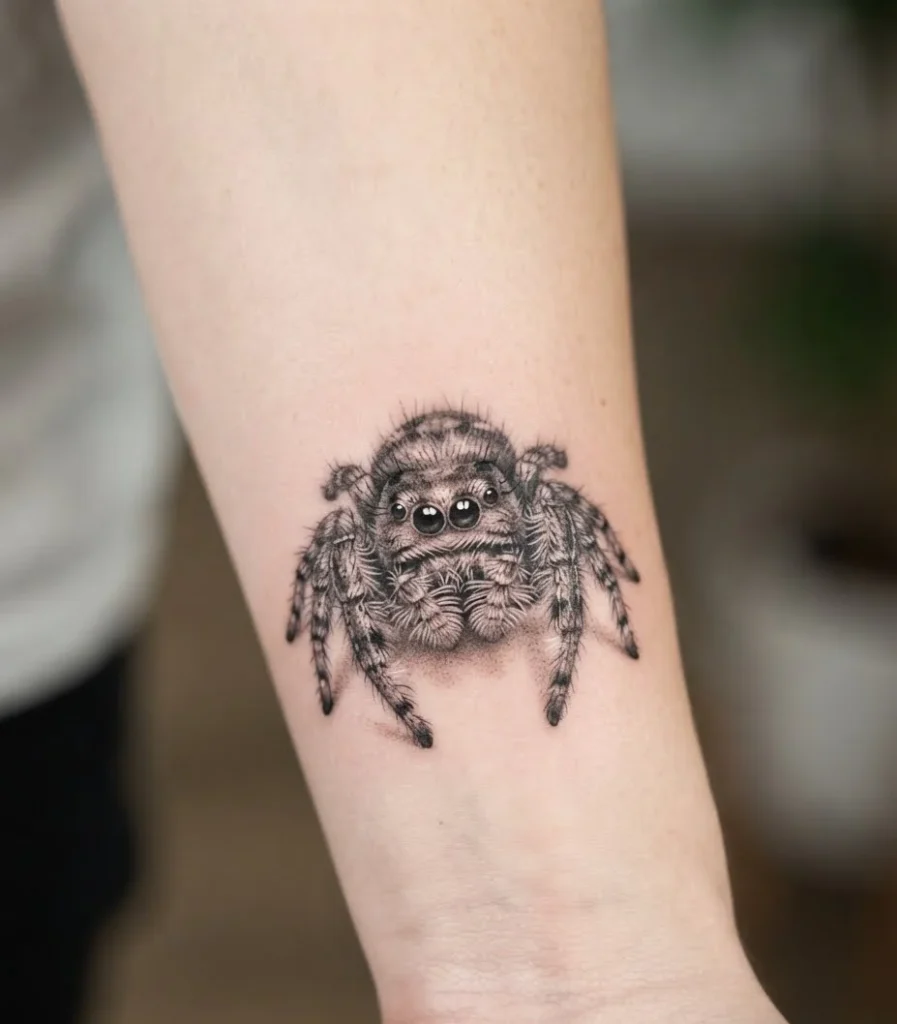
A close-up jumping spider portrait leans entirely on the species’ most recognizable feature, its four pairs of eyes, with the two enormous front eyes doing most of the emotional work. Detailed shading picks up the fuzzy texture covering its body and legs, while the eyes get just enough shine to look genuinely curious rather than menacing. It’s proof that a spider tattoo can be captivating instead of unsettling.
Meaning: Jumping spiders symbolize sharp instinct and quiet intelligence, hunters who rely on precision and vision rather than a web.
Placement: Forearm gives the portrait enough space for the eye detail to stay the clear focal point.
Pain Level: 5/10
Moderate
Not every spider needs a web to be interesting.
2. Jumping Spider Mid-Leap
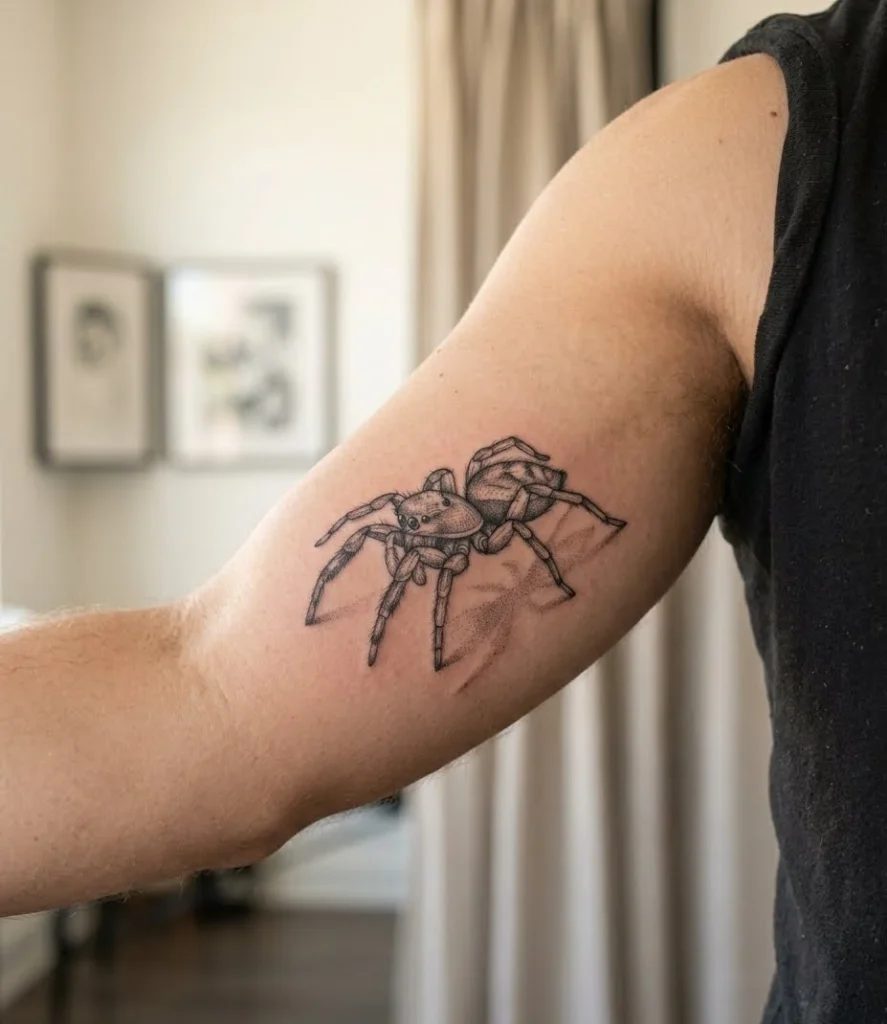
Caught mid-jump, legs extended and body angled forward, this design captures the exact motion jumping spiders are named for. Unlike most spider tattoos that show the subject sitting still, this one is all momentum, built to feel alive rather than posed.
Meaning: The leap itself represents decisive action, committing fully once the moment to move actually arrives.
Placement: Shoulder or upper arm gives the extended legs room to stretch out across the composition.
Fine Line
Nature
A spider that actually looks like it’s going somewhere.
3. Black Widow with Red Hourglass
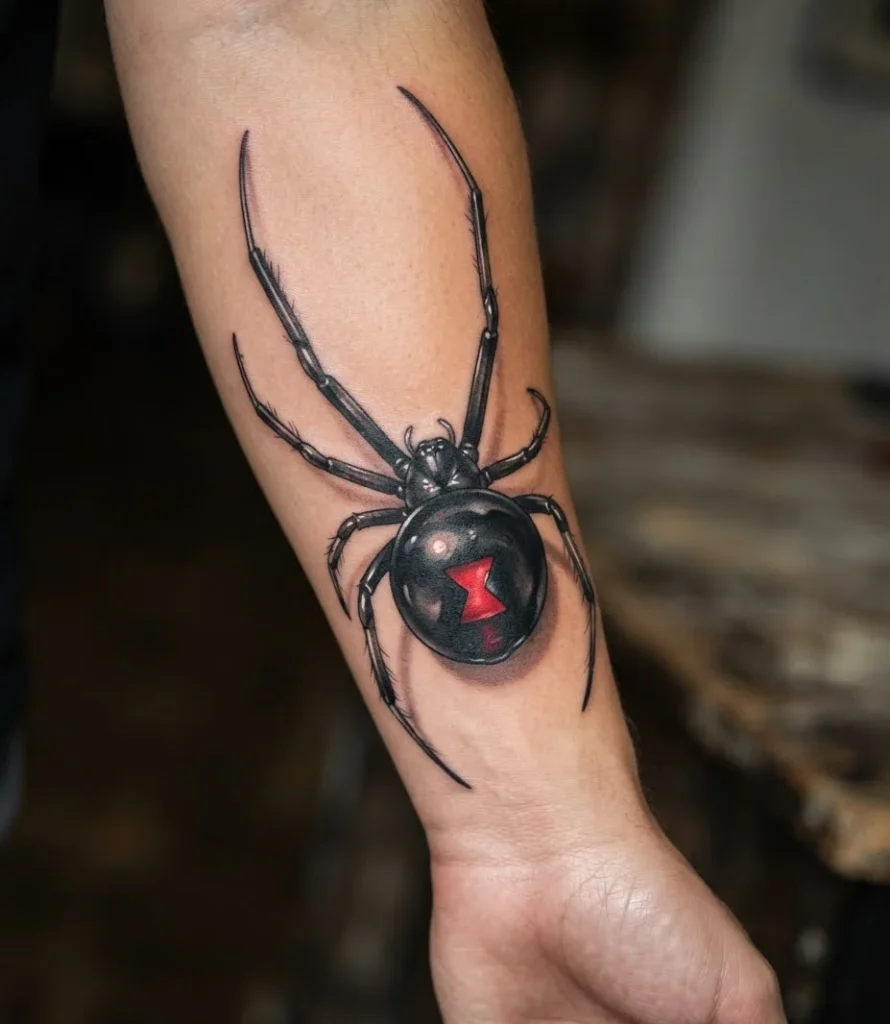
Glossy black body, a single bold red hourglass marking underneath, the black widow is the most immediately recognizable spider in tattoo work for a reason. The high contrast between the deep black and sharp red keeps the design bold and legible even at a smaller size. Our black and red tattoo ideas cover more designs built around this exact same striking color pairing.
Meaning: Danger and transformation, a nod to the widow’s reputation as something beautiful that shouldn’t be underestimated.
Placement: Forearm keeps the hourglass marking visible without needing much detail work around it.
📍 Shoulder
📍 Ribcage
Small spider, unmistakable warning.
4. Tarantula Realism
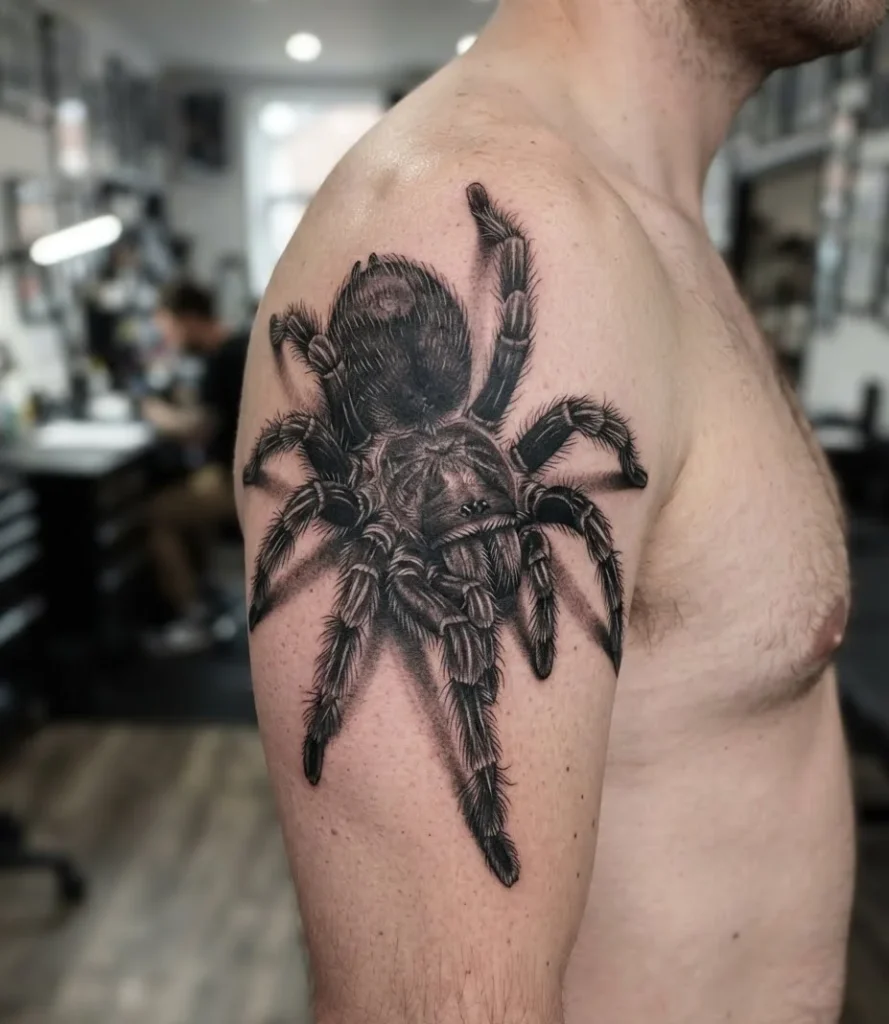
A large, heavily detailed tarantula tattoo goes all in on texture, dense, layered fur rendered in fine linework across a heavy, low-slung body. This is one of the bigger commitments on this list, both in size and detail, but it rewards that commitment with a design that reads as genuinely lifelike rather than stylized.
Meaning: Tarantulas carry associations with patience and primal power, a creature that doesn’t need speed to be formidable.
Placement: Upper arm or back gives the dense fur detail enough real estate to stay crisp.
Pain Level: 6/10
Moderate to High
Slow, heavy, and impossible to ignore.
5. Garden / Orb Weaver on Web
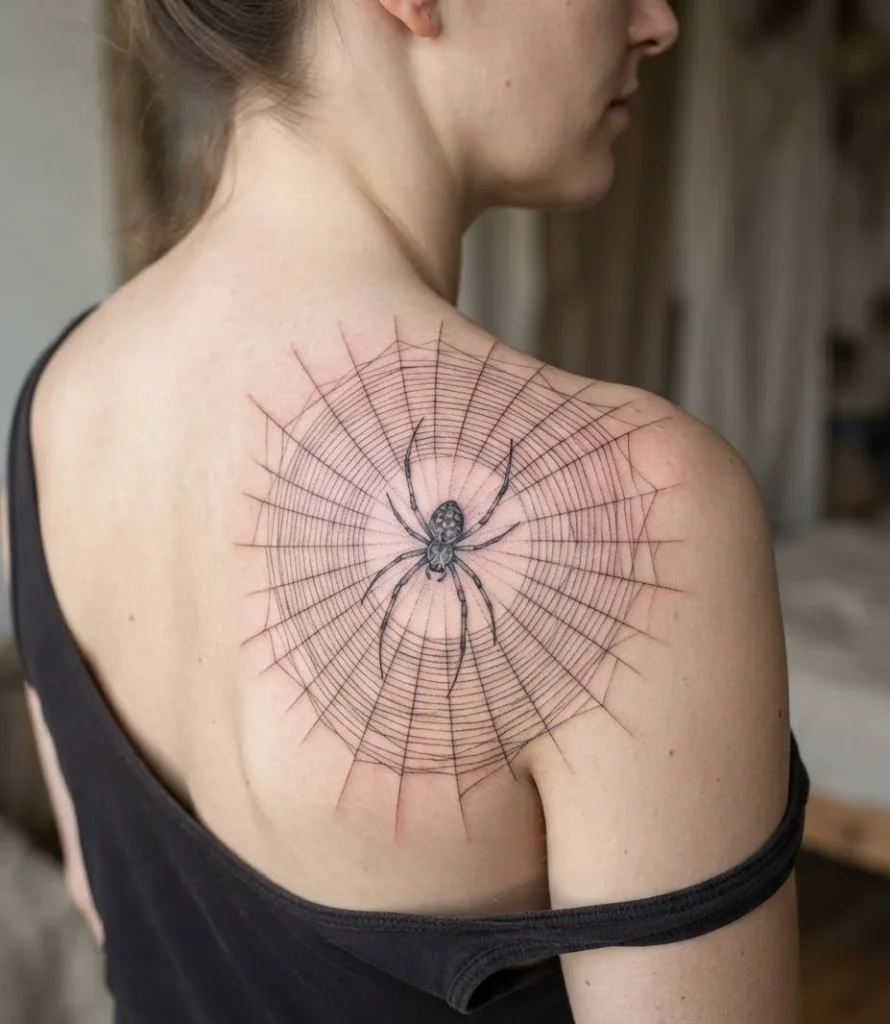
A slender garden spider perched at the center of its own intricately spun web pairs the creature with the exact structure that makes it famous. The web’s radiating lines and spiral pattern take real precision to render cleanly, but they’re what turn this from a spider tattoo into a small piece of natural architecture.
Meaning: The web itself carries the heavier symbolism here, patience, creativity, and the quiet work of building something intricate one strand at a time.
Placement: Shoulder blade or back gives the full web pattern room to spread out.
Nature
Fine Line
Built one careful line at a time, just like the real thing.
6. Spider Wrapping a Joint
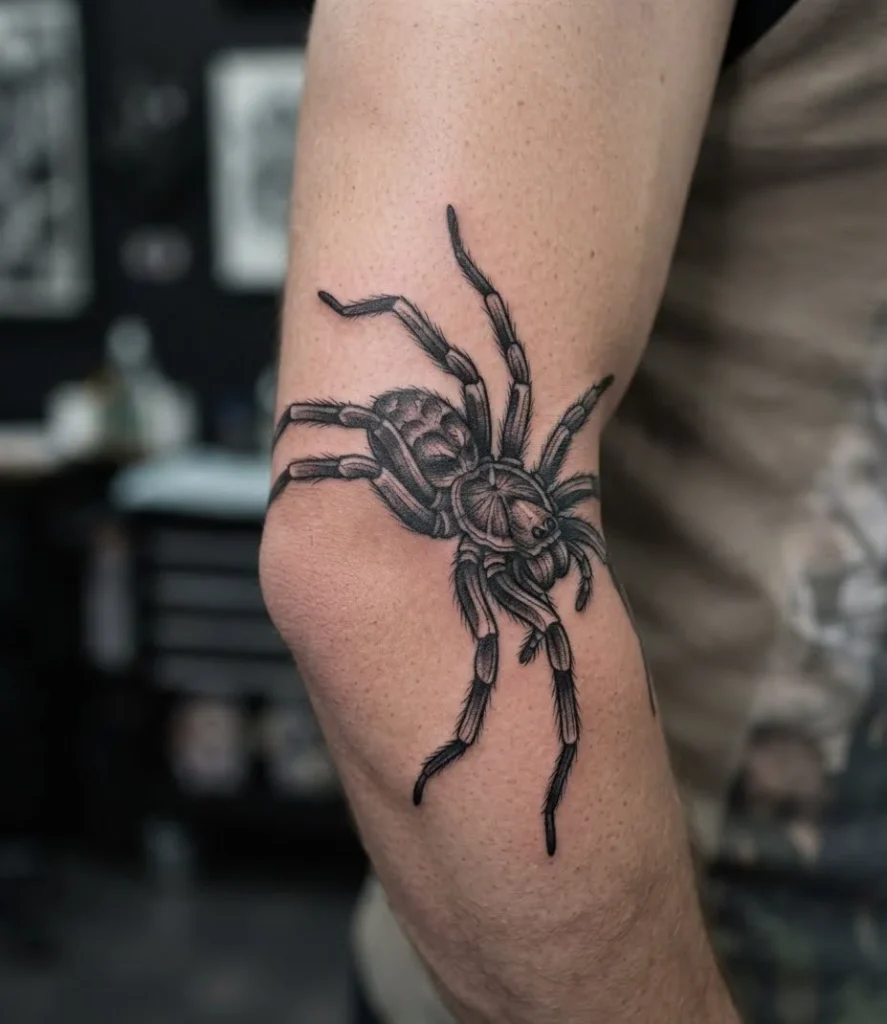
Instead of sitting flat on skin, this version positions the spider’s legs draped directly over a joint, so the natural bend of an elbow or knuckle does the work of making the whole design look like it’s actually gripping and crawling across you. It’s less about a specific species and more about the placement trick itself.
Meaning: The crawling illusion plays on the same unease real spiders provoke, catching you off guard from somewhere unexpected.
Placement: Elbow or knuckle gives the joint’s natural curve the most convincing crawl effect.
📍 Knuckle
📍 Collarbone
The placement is doing half the work here, and it shows.
7. Anansi the Trickster Spider
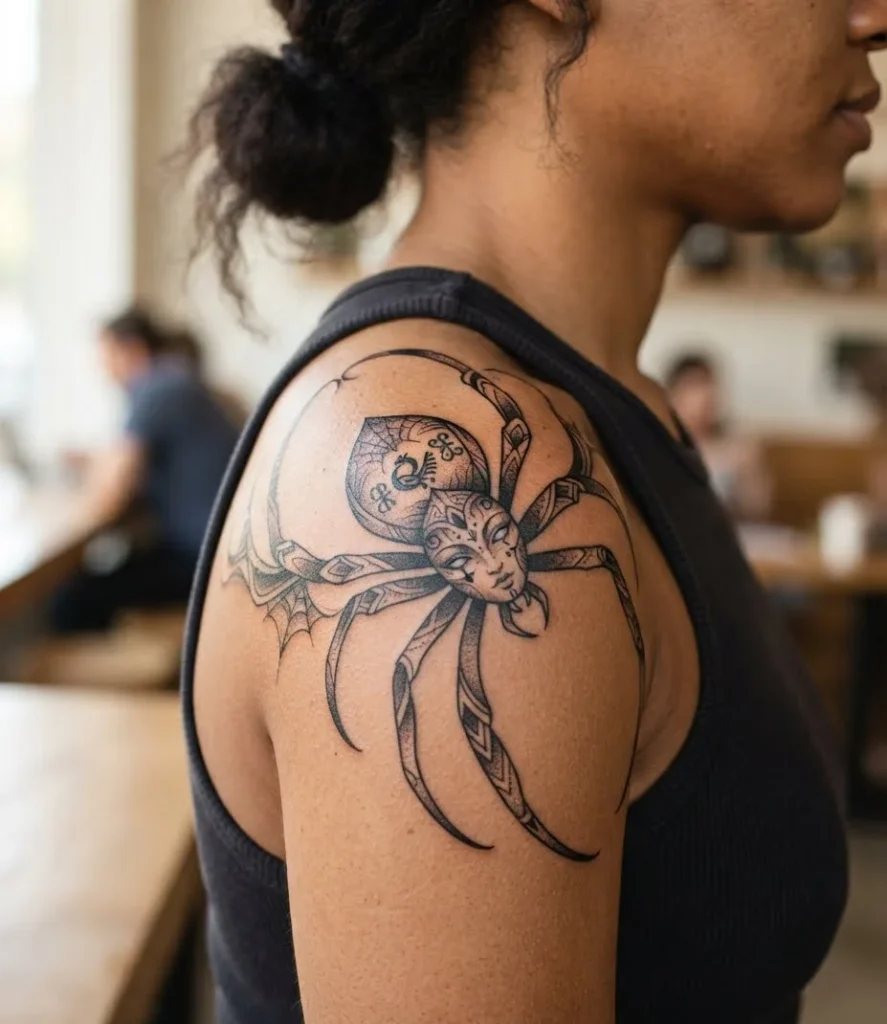
Rooted in West African and Caribbean folklore, Anansi is part spider, part man, and entirely clever, a trickster who outsmarts creatures far bigger than himself through wit rather than strength. A tattoo built around this figure usually blends human and arachnid features, sometimes a spider body with human hands, sometimes a more traditional spider form with an unmistakably knowing expression.
Meaning: Anansi represents intelligence over brute force, and storytelling itself, since so many of his myths explain how stories came to belong to everyone.
Placement: Shoulder or back gives this mythological figure enough space to include real narrative detail.
Pain Level: 5/10
Moderate
The smartest creature in the room usually isn’t the biggest.
8. Grandmother Spider (Creation Myth)
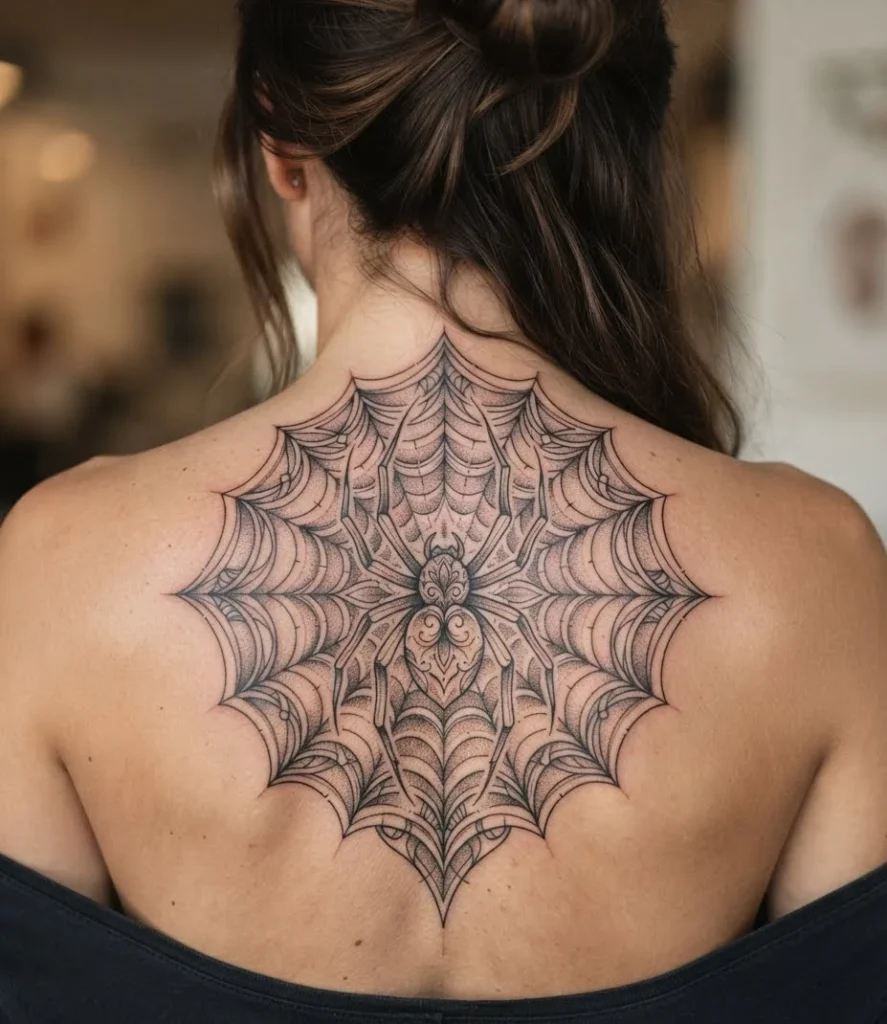
In several Native American traditions, Grandmother Spider is a creator figure, credited with weaving the world into being or bringing fire and light to humanity. A tattoo honoring this figure usually centers the spider within a woven pattern or dreamcatcher-like web, treating the creature as maker rather than menace.
Meaning: This design carries themes of creation, wisdom, and protection, a spider as guardian and origin point rather than something to fear.
Placement: Upper back or shoulder gives the woven detail around the spider room to stay legible.
Illustrative
Symbolic
The oldest spider story is also one of the kindest.
9. Minimalist Line Spider
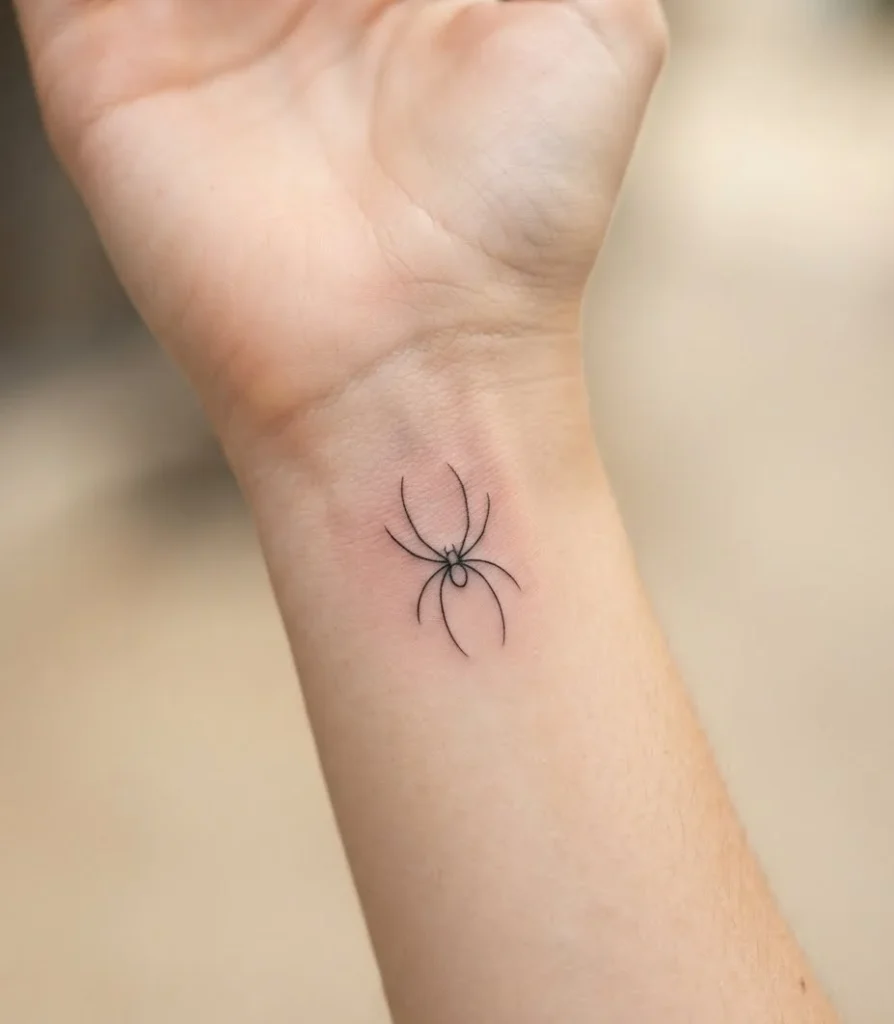
Reduced to a single continuous line, a minimalist spider trades every bit of realistic detail for pure, simple shape, just enough curve and angle to read instantly as spider without a single leg joint rendered in full. Our fineline tattoo ideas cover more single-line designs built with this same stripped-down approach.
Meaning: Even at its simplest, the shape alone still carries the same unsettling, instantly recognizable read spiders always get.
Placement: Wrist or behind the ear suits the design’s small, quiet scale.
📍 Behind the Ear
📍 Ankle
All eight legs, none of the detail, still unmistakably a spider.
10. Geometric Spider
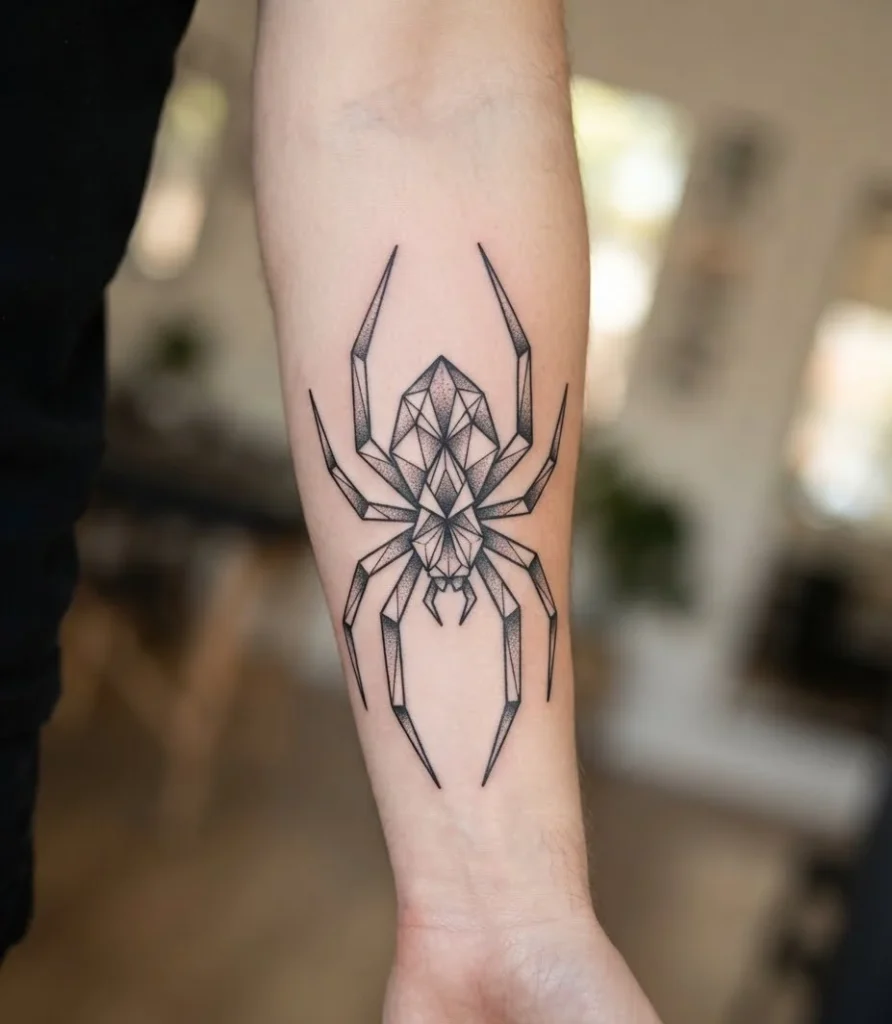
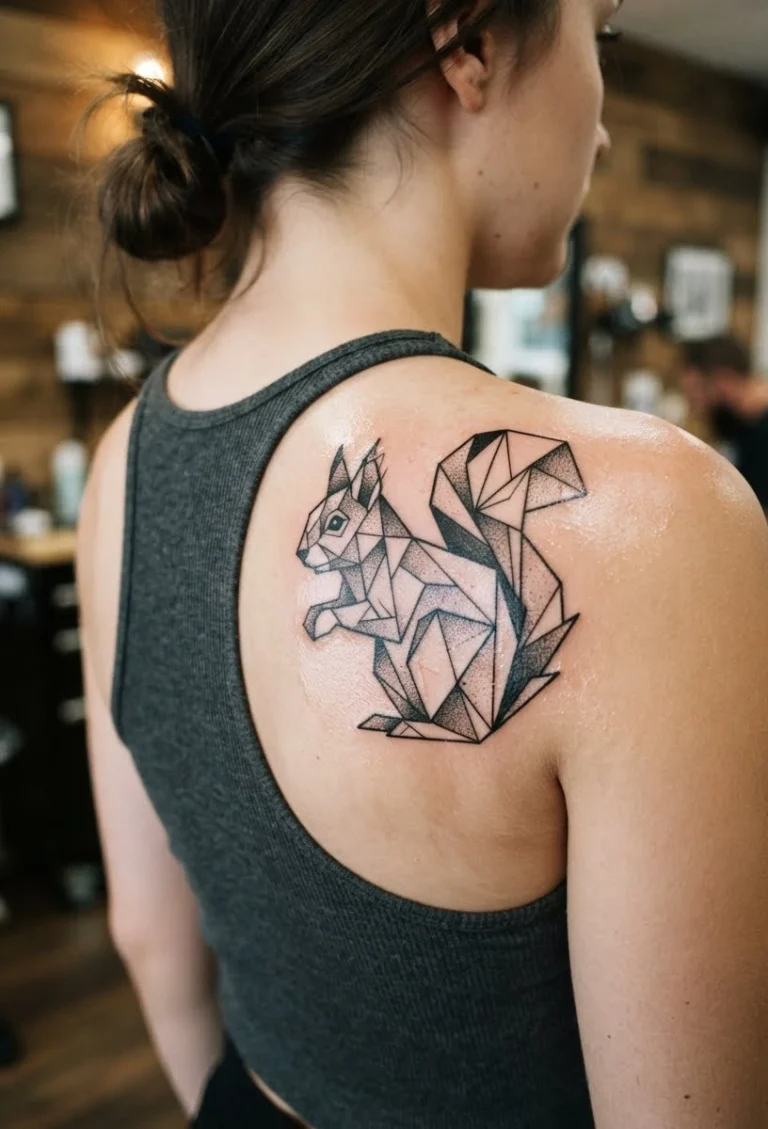
Rebuilding a spider from clean geometric shapes, triangular legs, a faceted body, straight structured angles, trades biological accuracy for architectural precision. It reads as calm and modern from a distance while still holding real detail up close, a very different mood than the realistic options on this list.
Meaning: The structured lines suggest control and intention, a spider reduced to pure pattern rather than instinct.
Placement: Forearm or shoulder blade lets the geometric shapes sit flat and stay crisp. Our mandala wrist tattoo ideas pair naturally with this same structured, patterned approach.
Pain Level: 4/10
Moderate
Precision dressed up as something that usually isn’t precise at all.
11. Spider Web Only (No Spider)
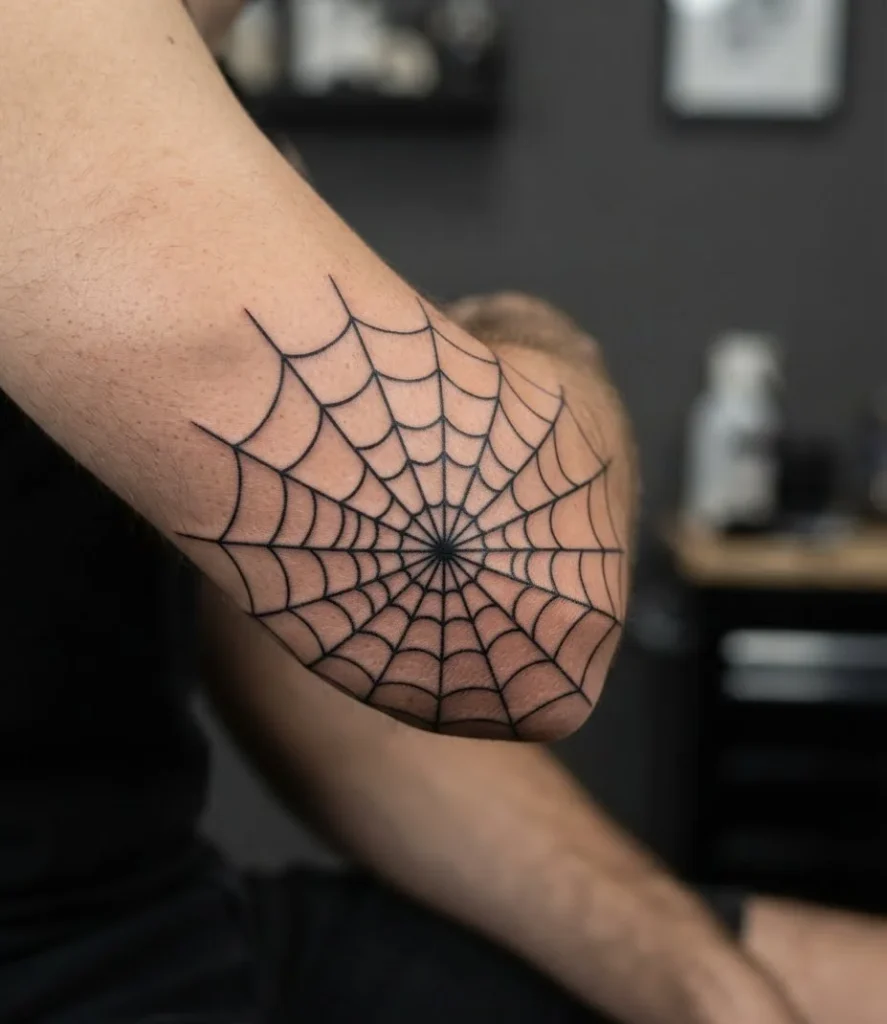
Sometimes the web says everything without needing the spider present at all. A detailed, radiating web pattern, whether wrapped around an elbow or spread flat across the shoulder, carries its own quiet symbolism about time, patience, and structure without a single arachnid in sight.
Meaning: An empty web still points to what built it, someone patient enough to construct something intricate one strand at a time.
Placement: Elbow is the classic choice, letting the joint’s natural bend become part of the web’s own structure.
Fine Line
Minimalist
Sometimes what’s missing says the most.
12. Dewdrop Web with Spider
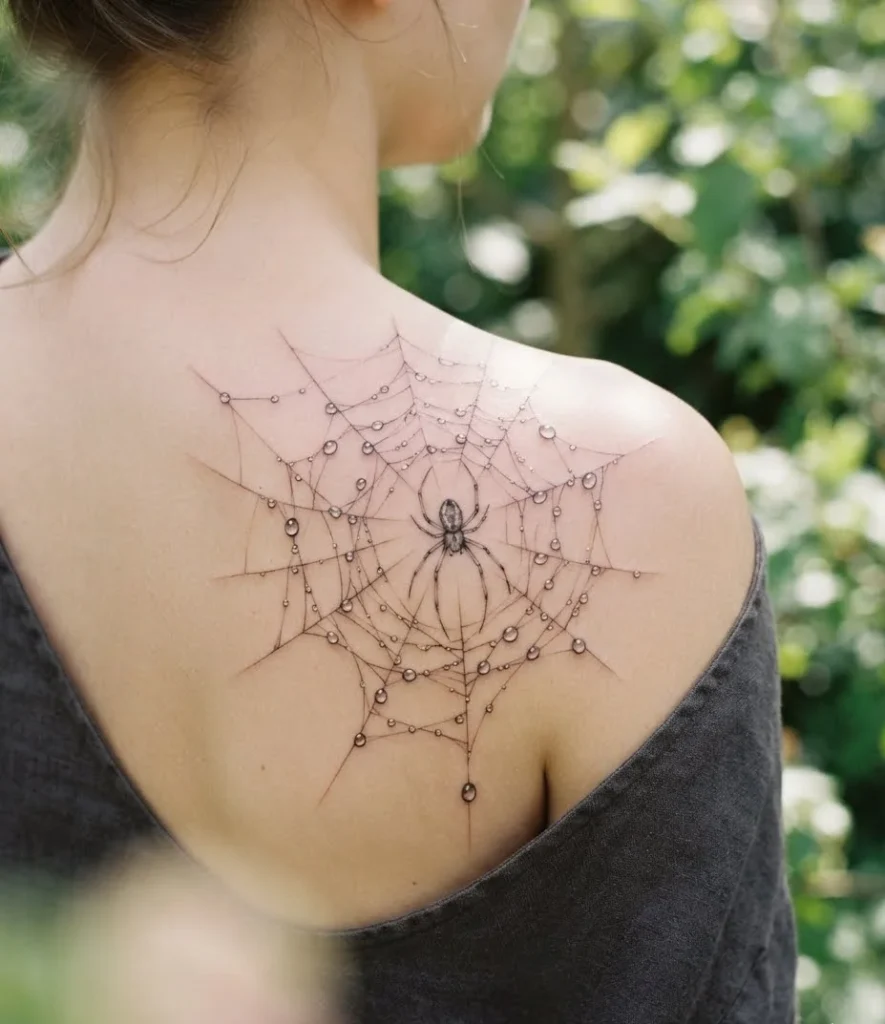
Add small beads of morning dew clinging to a spider’s web and the whole design softens considerably, turning something usually associated with dread into a quiet, almost peaceful nature scene. The dewdrops get rendered as tiny reflective highlights along the web’s strands, adding realism without adding color.
Meaning: The dew ties the design to fleeting beauty, something delicate and temporary caught in the middle of something built to last.
Placement: Shoulder blade or back gives the full web and dewdrop detail enough space to stay clean.
📍 Back
📍 Forearm
Even something built to trap can still look this gentle.
13. Gothic Skull-Bodied Spider
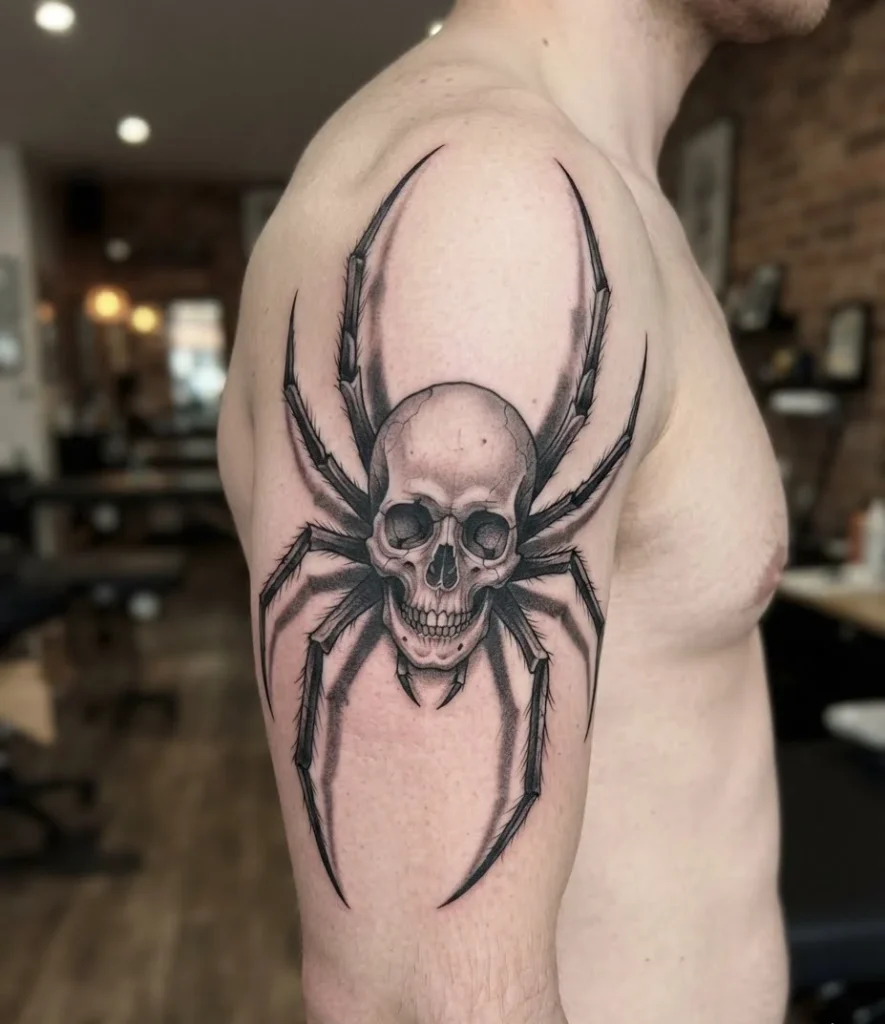
Swap the spider’s usual abdomen for a small skull and the design shifts fully into gothic territory, deadly and a little theatrical rather than simply creepy. This combination leans hard into contrast, sharp spider legs framing something unmistakably human and mortal. Our creepy gothic tattoo ideas cover more designs built in this same dark, dramatic register.
Meaning: The pairing points directly at mortality and danger, a creature already associated with fear now wearing a symbol of death outright.
Placement: Upper arm or ribs suits the design’s heavier, more serious tone.
Pain Level: 6/10
Moderate to High
Not subtle, and not trying to be.
14. Watercolor Spider
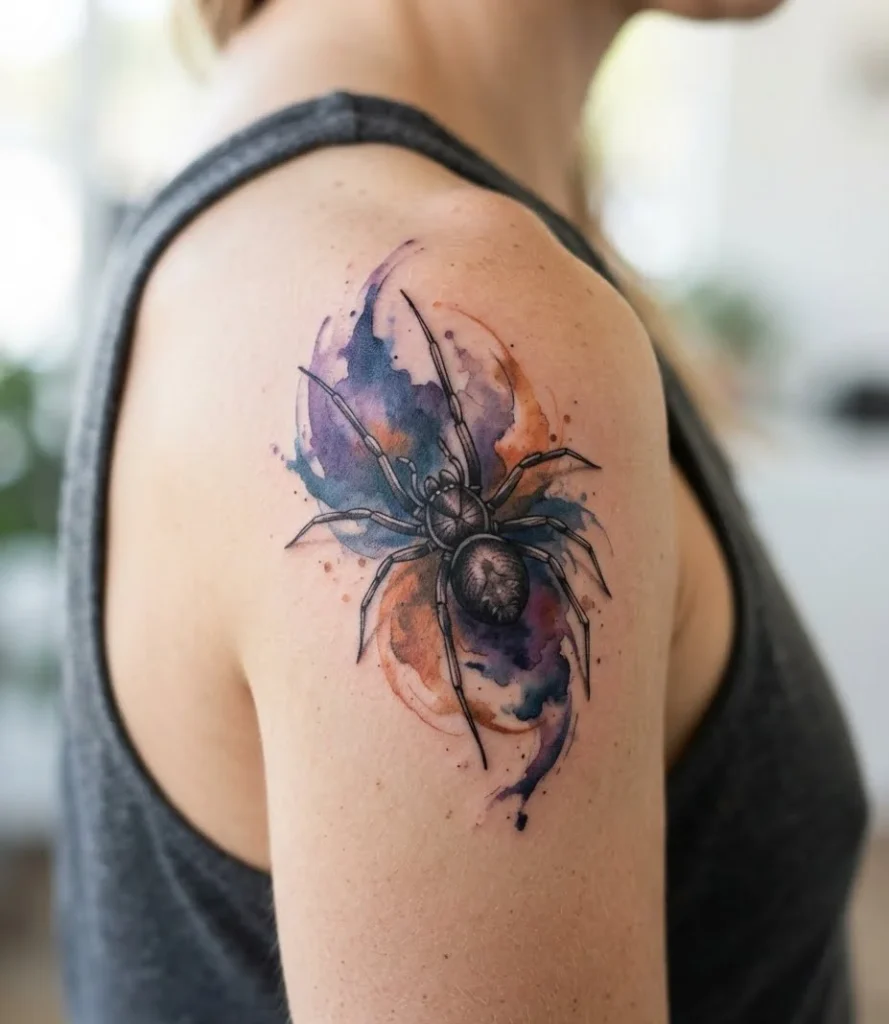
Loose washes of deep purple, blue, or burnt orange bleed outward from a solid black spider silhouette in this style, softening the subject considerably without losing its instantly recognizable shape. The color stays secondary, a backdrop rather than the main event, letting the spider’s outline do the heavy lifting.
Meaning: The blended color adds an unexpected layer of beauty to a creature people usually associate only with dread.
Placement: Shoulder or upper arm gives the color wash room to spread without feeling cramped.
Illustrative
Color
Something usually feared, painted like it’s beautiful. Because it is.
15. Spider Crawling Over Knuckles
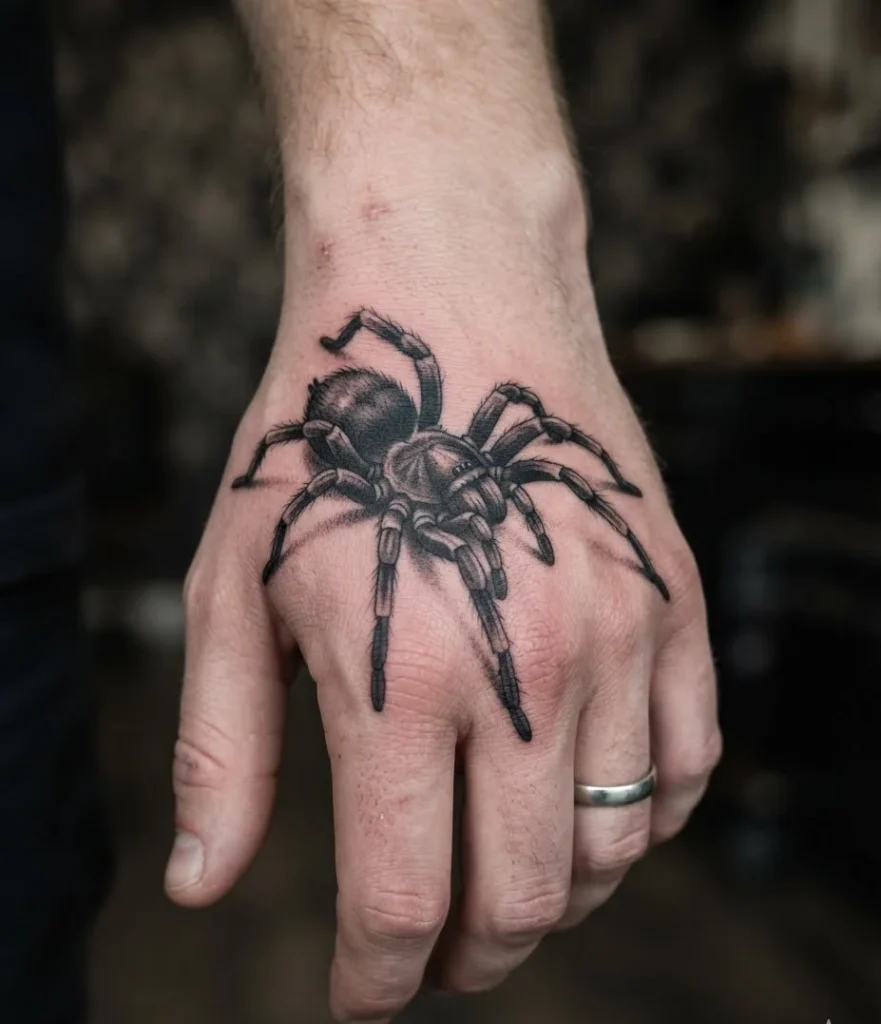
Positioned directly across the knuckles, legs bending precisely at each finger joint, this placement turns your own hand’s natural movement into part of the design. Every time you make a fist, the spider’s legs visibly flex along with it.
Meaning: Beyond the visual trick, hand and knuckle placements have long carried a bold, unapologetic read in tattoo culture, this isn’t a design meant to hide.
Placement: Back of the hand across the knuckles is the entire point of this one, don’t shrink it down elsewhere.
📍 Back of Hand
A spider that moves when you do.
16. Spider on the Neck
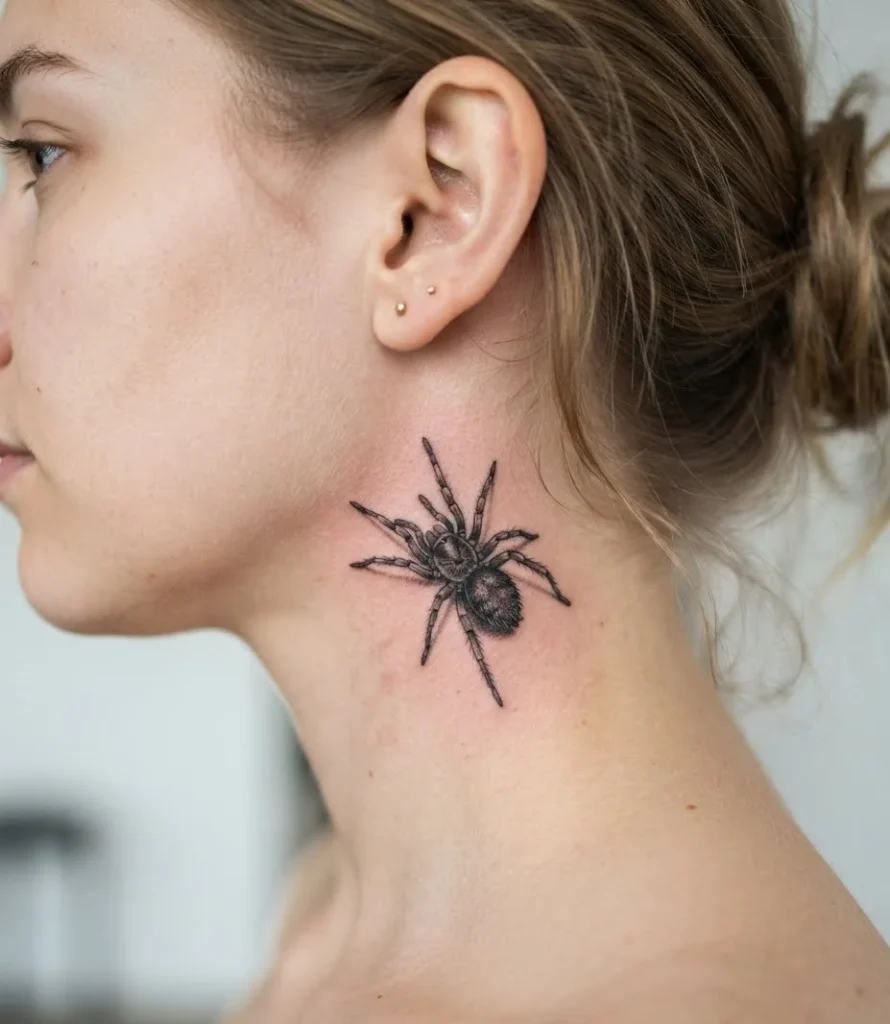
A single spider positioned just below the ear or along the side of the neck plays on the classic unsettling image of something crawling somewhere you can’t easily see yourself. Kept relatively small and detailed, it works as a striking, highly visible piece without needing much surface area.
Meaning: The neck placement itself becomes part of the meaning, something just out of your own sightline, a little unnerving by design.
Placement: Side of the neck or just behind the ear keeps the spider visible without overwhelming the area.
Pain Level: 7/10
High
The placement is the punchline.
17. Charlotte’s Web Inspired
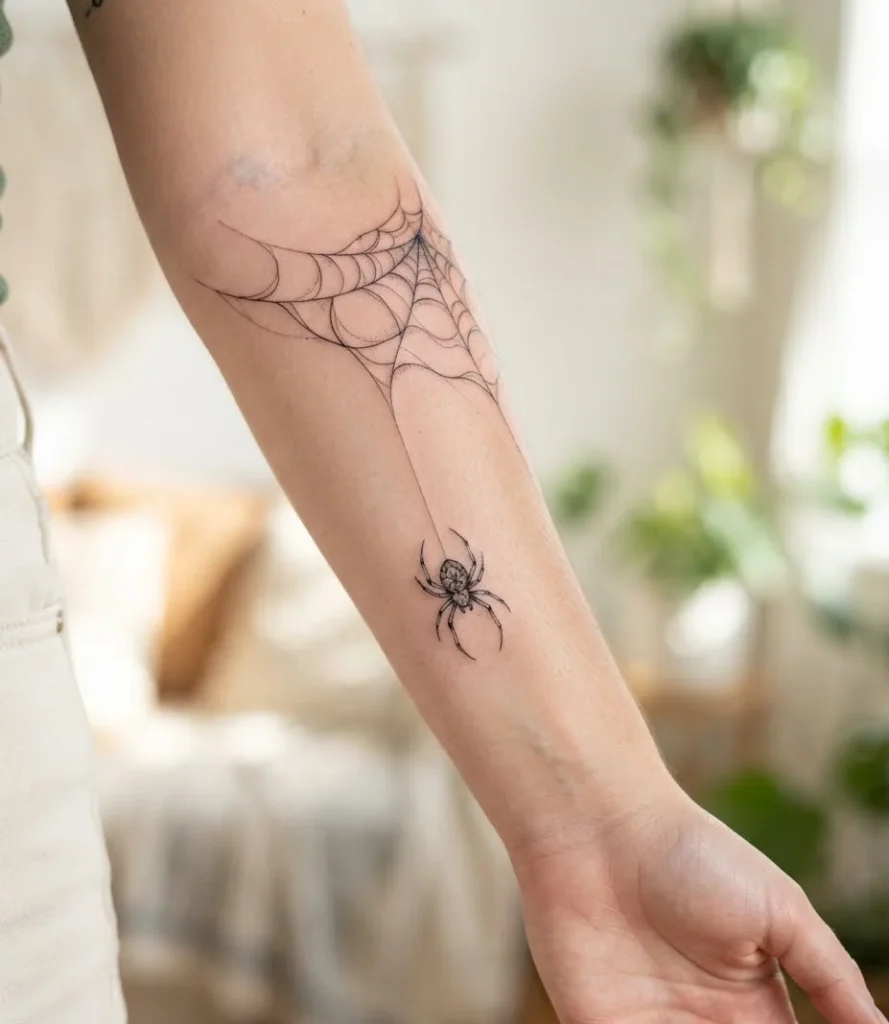
For anyone whose actual introduction to spiders was a children’s book rather than a horror movie, this design leans into that gentler association, a spider paired with a single woven word or a web spelling out something meaningful, echoing the story’s own famous device.
Meaning: This version carries warmth and loyalty rather than fear, tied to a story about friendship and being seen for who you really are.
Placement: Forearm or ankle gives the woven lettering enough length to stay legible.
Nostalgic
Fine Line
Proof a spider tattoo can be sentimental instead of scary.
18. Spider and Black Rose
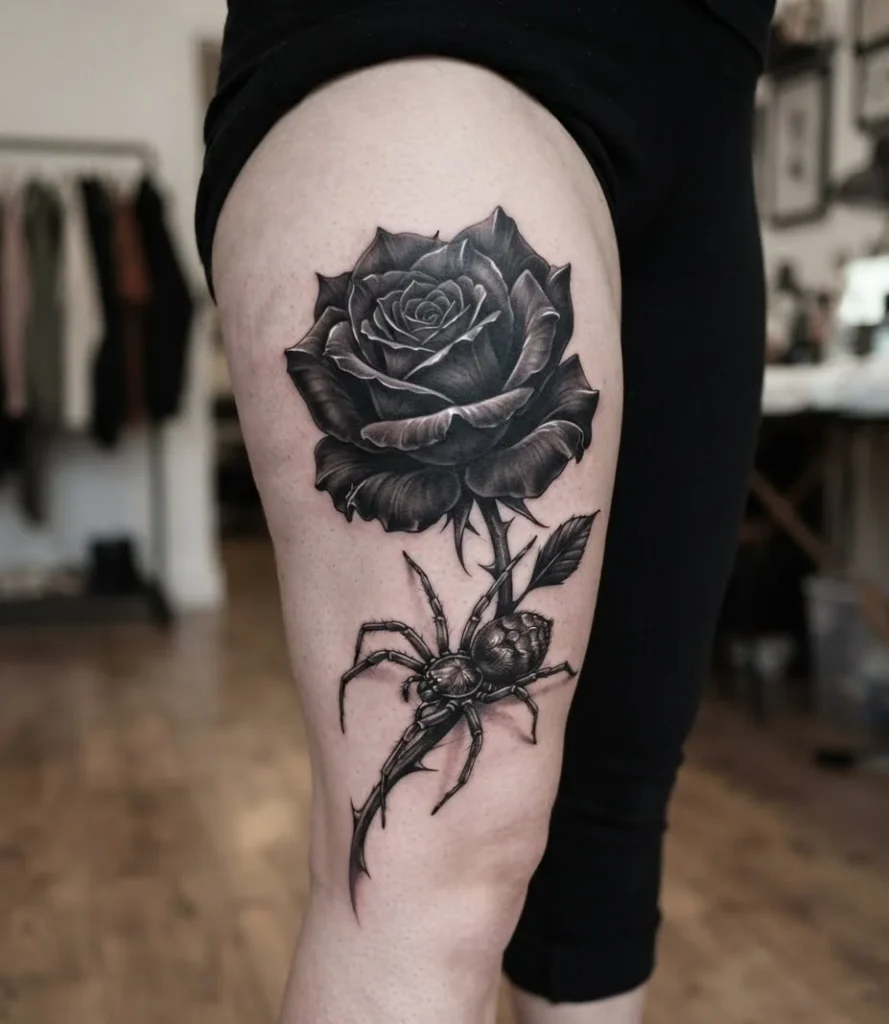
Pairing a spider with a single black rose brings two symbols of danger and beauty into the same small composition. The spider usually rests at the base of the rose or along its stem, framed rather than centered, letting the flower carry most of the visual weight.
Meaning: Together they suggest beauty that comes with real risk attached, nothing about this pairing pretends to be simple or safe.
Placement: Forearm or thigh gives both elements enough room to stay distinct from each other.
📍 Thigh
📍 Ribcage
Beautiful and a little dangerous, exactly as intended.
19. Tiny Spider Constellation Dots
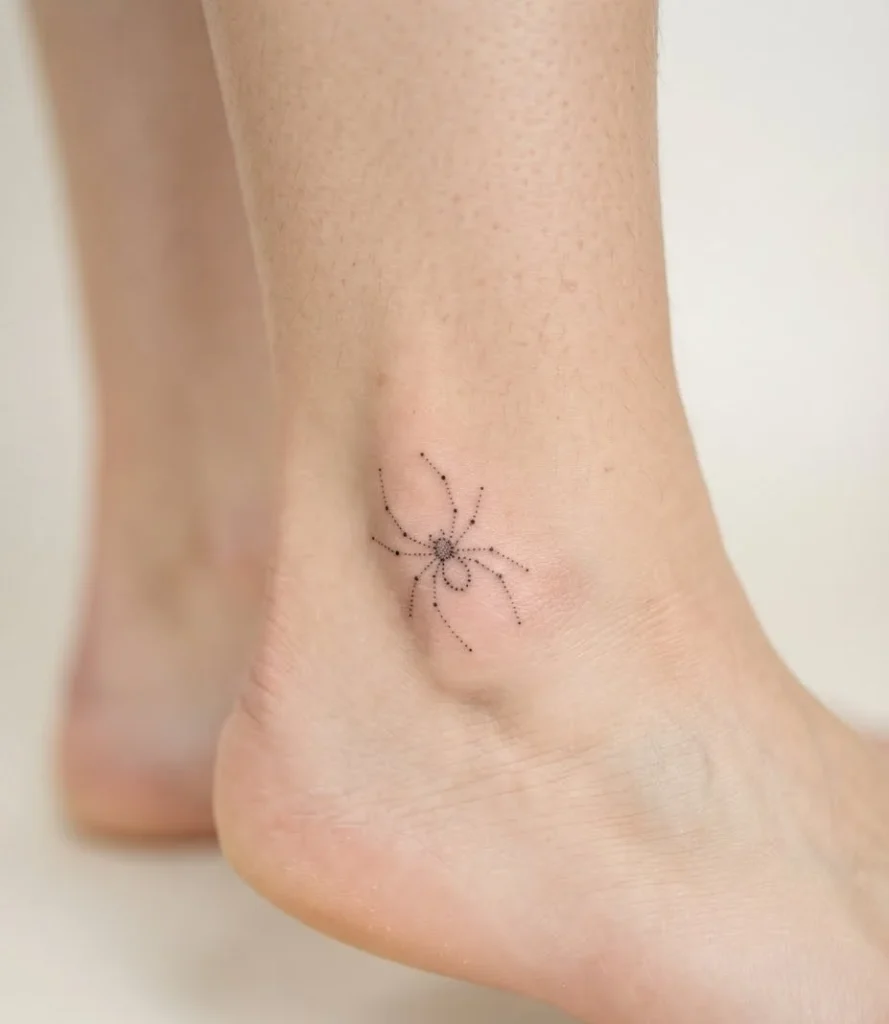
Built entirely from small connected dots rather than solid linework, this version suggests a spider’s shape without fully committing to it, more implication than illustration. It’s one of the lightest, most understated designs on this entire list.
Meaning: The dotted, incomplete quality mirrors how spiders often exist at the edge of our attention, noticed more by silhouette than by detail.
Placement: Wrist or ankle suits the design’s small, delicate scale.
Pain Level: 3/10
Mild
Just enough dots to know exactly what it is.
20. Peacock Jumping Spider
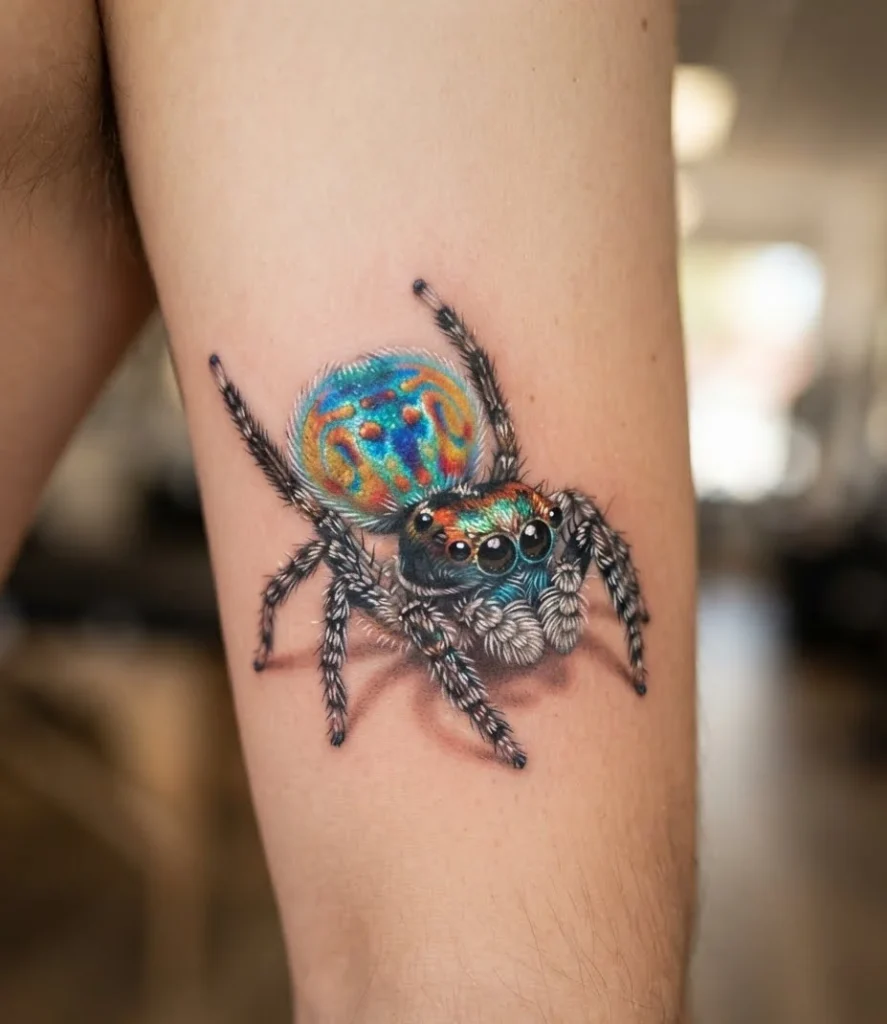
The peacock jumping spider is a real species known for an extraordinary rainbow-colored abdomen it fans out during courtship displays, and a tattoo built around it trades the usual black-and-grey spider palette for genuinely vivid color. Detailed shading captures the iridescent shimmer that makes this tiny species look almost unreal in photographs.
Meaning: Beyond general spider symbolism, this specific species points to hidden beauty, something small and easily overlooked that turns out to be spectacular up close.
Placement: Upper arm or shoulder gives the fanned, colorful abdomen enough room to stay the clear focal point.
Realistic
Nature
The most colorful spider you’ve probably never heard of.
21. Spider in a Dreamcatcher
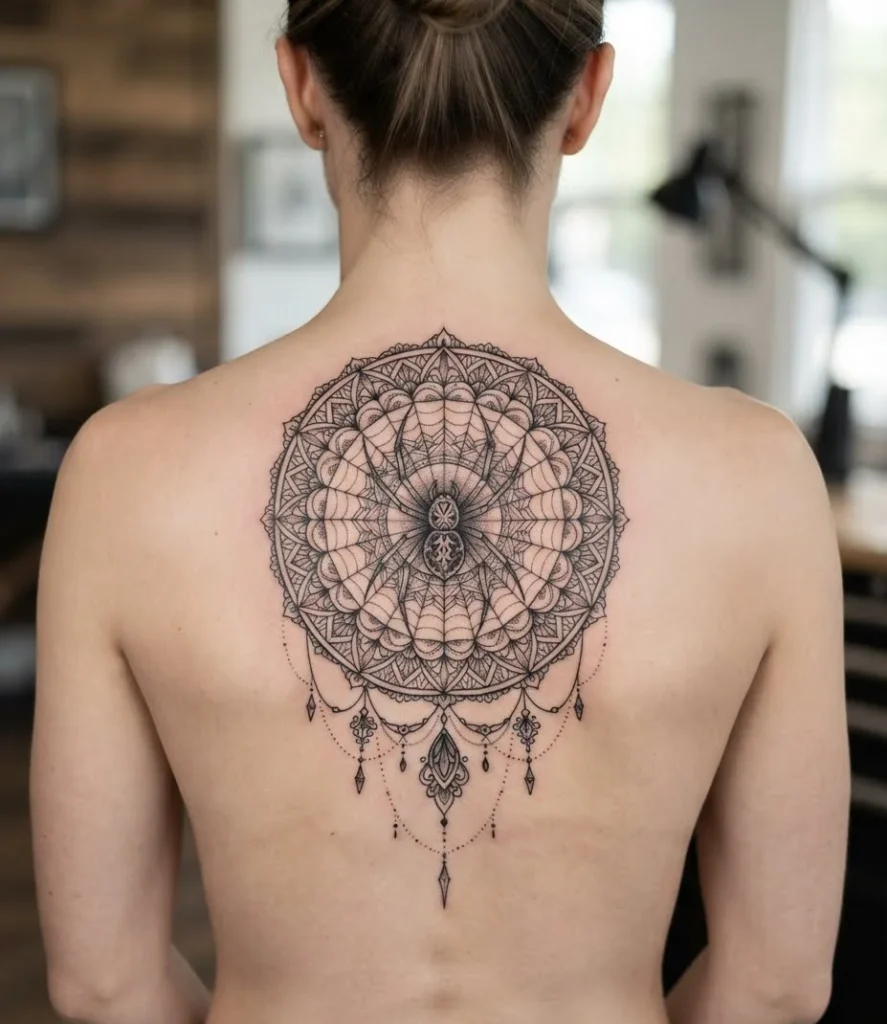
Set a small spider at the center of a woven dreamcatcher and the design nods directly back to Grandmother Spider’s role as weaver and protector rather than treating the spider as decoration. Feathers and beads trail down from the circle while the spider sits at its heart, holding the whole structure together.
Meaning: This pairing reinforces the spider as maker and guardian, filtering out what doesn’t serve you rather than something to fear.
Placement: Shoulder or ribcage gives both the circle and the feathers room to hang naturally.
📍 Ribcage
📍 Upper Arm
A protector, hiding in plain sight.
Final Thoughts
Twenty-one ways to prove spiders deserve better than the jump-scare treatment they usually get.
Whether you’re drawn to a jumping spider’s oversized, curious eyes or the quiet menace of a black widow’s red hourglass, the details matter here more than almost any other tattoo subject, eight legs, real joints, a narrow waist connecting two body segments.
Get those right, maybe wrap the design around a joint for that crawling effect, and you’ll end up with something people actually stop to look closely at. Which spider are you bringing to your next consult?
Frequently Asked Questions
Are jumping spider tattoos less “creepy” than other spider designs?
Generally yes. Jumping spiders have large, forward-facing eyes and compact, fuzzy bodies that read as curious or even cute rather than menacing, which is why they’ve become popular with people who love the idea of a spider tattoo but not the horror-movie aesthetic.
What does a spider tattoo symbolize?
It depends heavily on species and styling, but common themes include creativity and patience tied to web-weaving, transformation, and in some cultures, like Anansi in West African and Caribbean folklore, cleverness and storytelling.
Do spider tattoos hurt more because of all the legs?
Not because of the legs specifically, pain still comes down to placement. A spider on the neck or ribs will hurt more than the same design on the forearm or calf, regardless of how many legs it has.
How many legs should a spider tattoo have?
Eight, always. Six legs is the single most common anatomical mistake in spider tattoo references, since that’s actually an insect’s leg count, not a spider’s.
What’s the best placement for a realistic, detailed spider tattoo?
Forearm, upper arm, or back give a detailed design enough room for leg joints and body segmentation to stay clear. For something bolder, positioning the spider over a joint like the elbow or knuckles creates a crawling, three-dimensional effect.