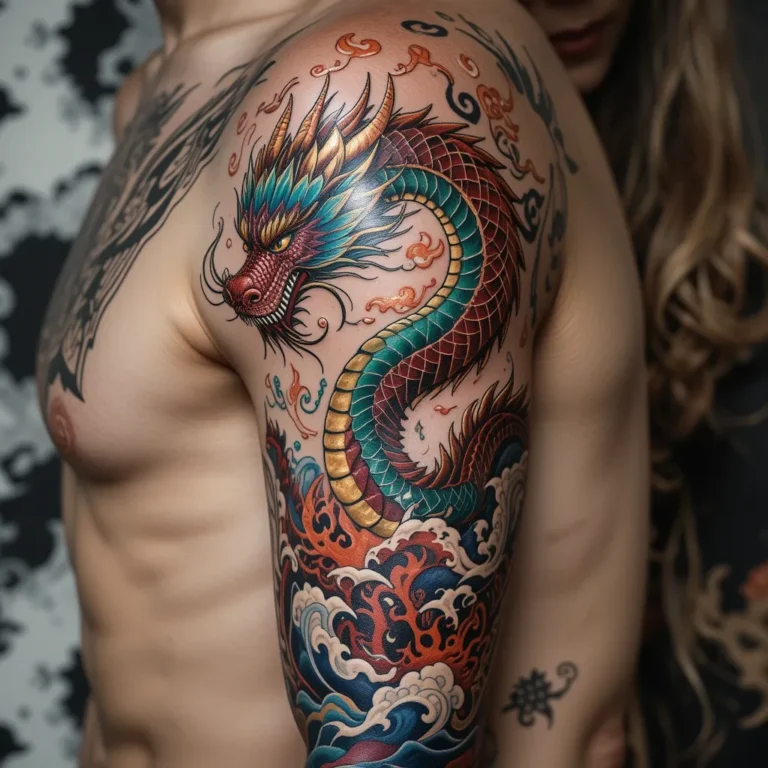
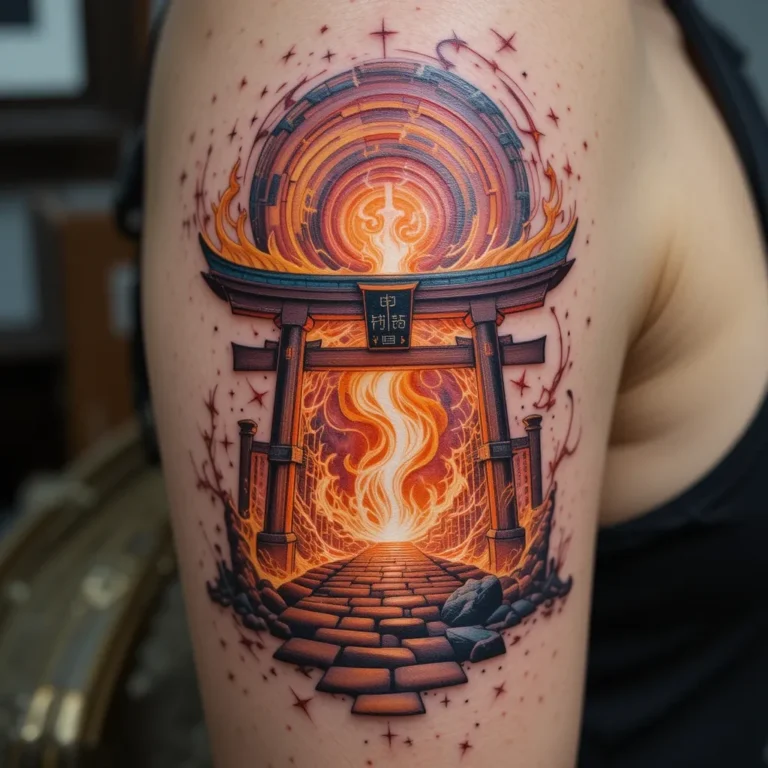
28 Stunning Geisha Tattoo Ideas with Deep Symbolism
A geisha tattoo carries more weight than most portrait style designs, since the figure itself is tied to centuries of Japanese art, discipline, and a very specific idea of beauty that took years to train into. That history is part of why these tattoos tend to hold up so well over time, artists have been refining how to render silk, hair ornaments, and painted expressions in ink for decades now.
What makes a geisha tattoo work isn’t just technical skill though. The strongest pieces pair her with something else, a dragon, a fan, a season, that gives the whole design a story instead of leaving her standing alone with nothing to react to.
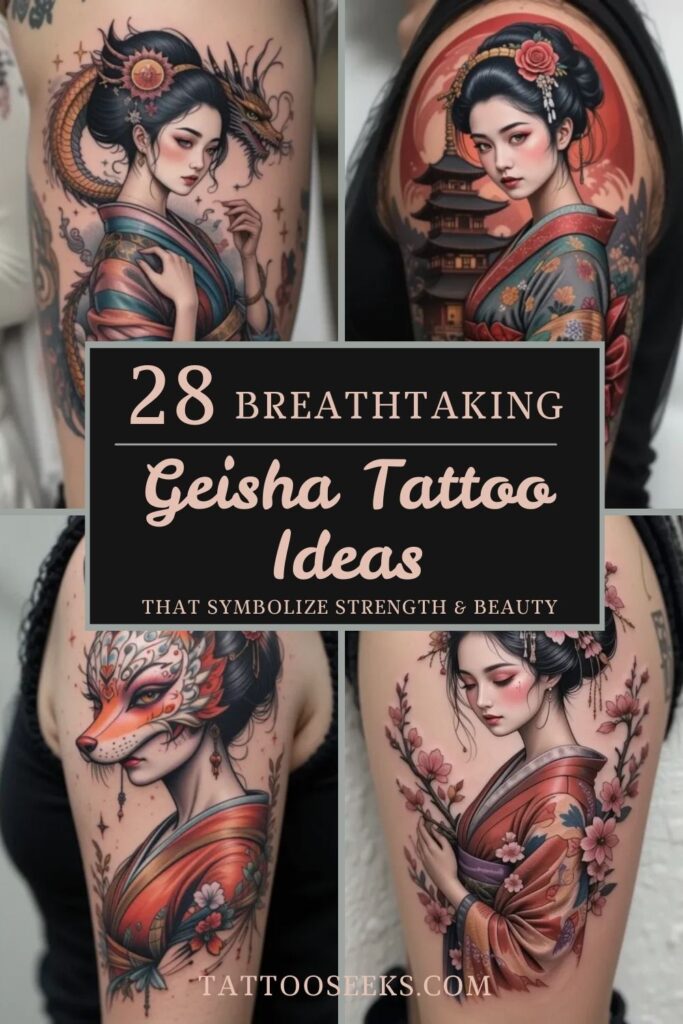
Below are 27 ideas that pull from tradition, mythology, and a few more contemporary reinterpretations, each one built around a different mood rather than repeating the same pose and expression twenty seven times.
1. A Traditional Geisha in Full Ceremonial Dress
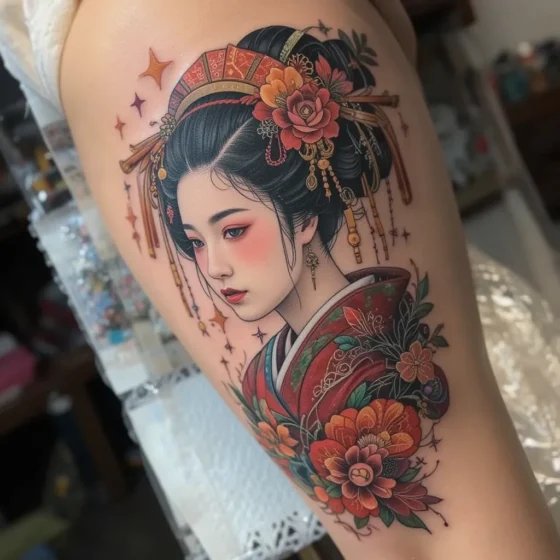
A traditional geisha tattoo leans fully into the ceremonial look, an elaborate kimono with layered sleeves, an ornate hair comb, and the distinct white painted face that immediately reads as geisha to anyone who sees it. Getting the details right here matters more than almost any other version on this list, since the whole point is historical accuracy rather than a loose interpretation.
Full color brings out the kimono’s pattern work best, though the design still holds up in black and grey for anyone who wants something more subdued.
2. A Black and Grey Geisha Portrait for Dramatic Depth
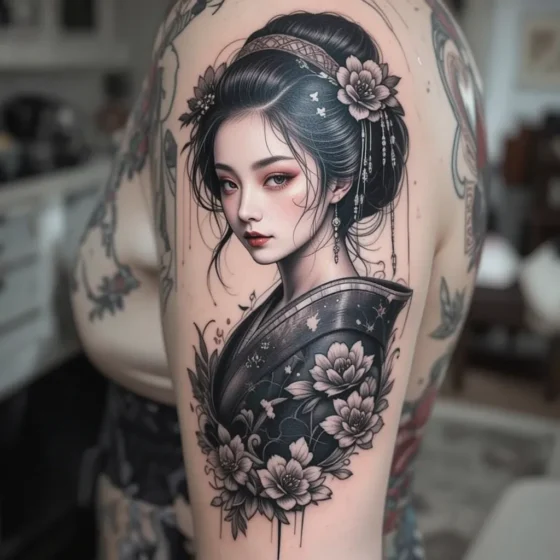
Stripping the color out of a geisha portrait shifts the whole mood toward something more dramatic and a little mysterious, since shading alone has to carry the depth that color would normally handle. A skilled black and grey artist uses contrast, deep shadow against bright highlight, to make the face and fabric feel three dimensional instead of flat.
💡 Quick Tip
Ask to see the artist’s black and grey portrait work specifically, not just their color pieces. Shading skill doesn’t always transfer evenly between the two styles.
3. A Geisha Surrounded by Falling Cherry Blossoms

Cherry blossoms scattered around a geisha figure, some falling, some already settled near her feet, tie the design to the idea that beauty is worth noticing precisely because it doesn’t last. The blossoms should feel like they’re actually falling, caught mid drift, rather than pasted on as background filler.
Petals at varied sizes, some overlapping her figure
Angles that suggest actual motion
Symmetrical, evenly spaced petals
Petals that all face the same static direction
4. A Samurai and Geisha Paired as Strength and Grace
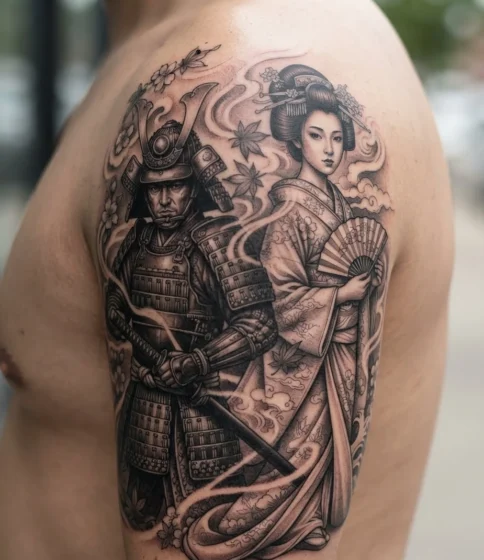
Placing a samurai figure alongside a geisha turns a single portrait into an actual narrative, one built around the contrast between disciplined strength and cultivated grace. The two figures don’t need to be touching or even facing each other for the piece to read as a pair, sometimes distance says more than closeness.
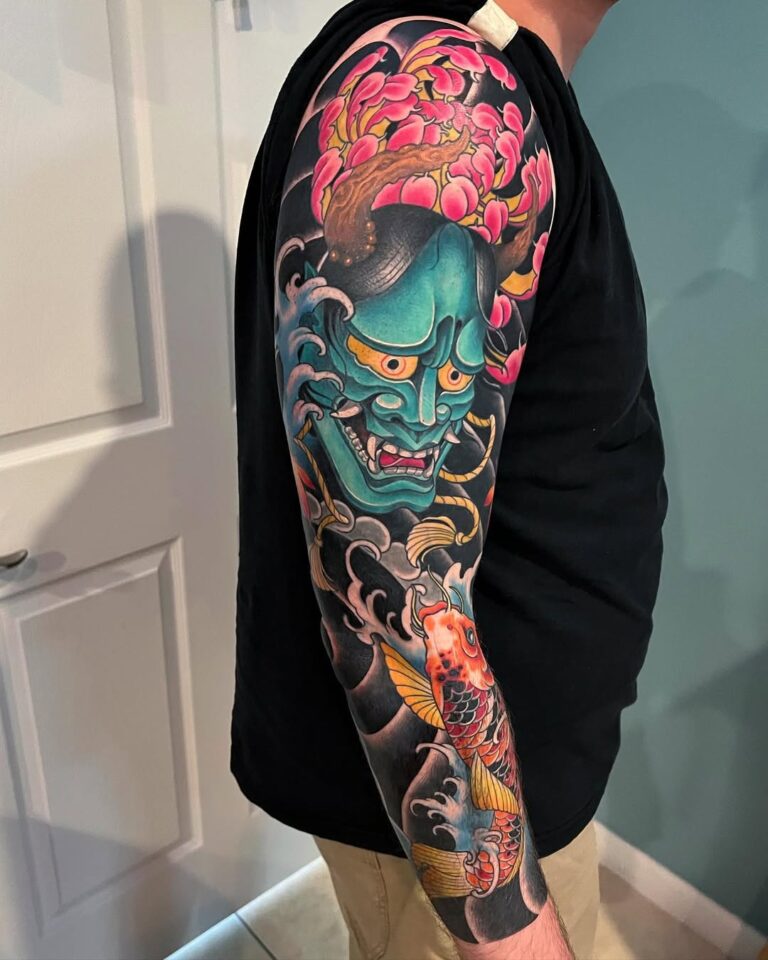
Planning a two figure piece
5. A Geisha Concealed Behind a Decorative Fan

A fan raised just high enough to hide half the face turns a straightforward portrait into something with real tension, the viewer sees enough to know she’s beautiful but not enough to read her expression. That partial concealment does more storytelling work than a fully visible face ever could.
The fan itself deserves real detail, since it’s effectively sharing the spotlight with her face.
6. A Minimalist Geisha in Clean Single Line Work
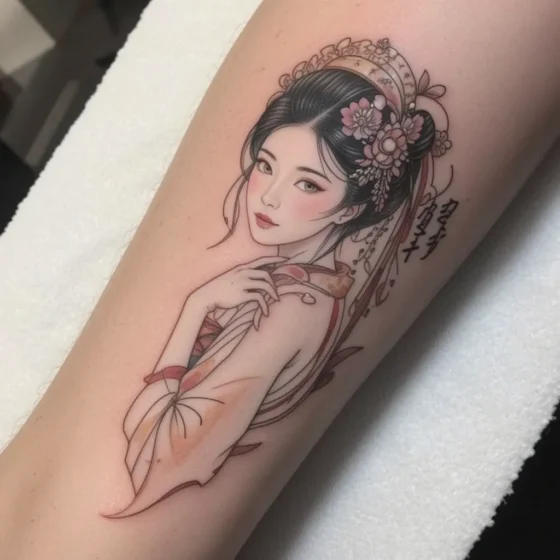
Reducing a geisha down to a single continuous line, hair, kimono silhouette, maybe one hand holding a fan, keeps the symbolism intact while stripping away everything that would otherwise require a large canvas and hours of shading. It’s the version of this design that actually works well small.
The tradeoff is worth understanding before committing to either direction.
| Minimalist | Traditional |
|---|---|
| Small, fast to tattoo | Larger, detailed, slower |
| Subtle, easy to place anywhere | Unmistakably geisha at a glance |
7. A Geisha Intertwined With a Coiling Dragon

A dragon wrapped loosely around a geisha figure, its body weaving behind her kimono and its head positioned near her shoulder, merges two of the most iconic images in Japanese tattoo art into one cohesive piece. The dragon shouldn’t overpower her, its role here is to frame and protect, not compete for the main focus.
Elegant on her own, but visually static.
Gains movement and real mythic weight.
8. A Watercolor Geisha in Soft Flowing Color
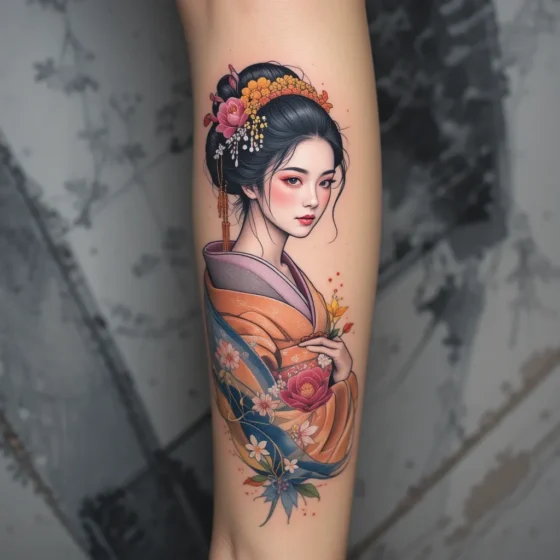
Watercolor technique replaces the geisha’s usual crisp linework with loose, bleeding color that softens the whole figure into something closer to a painting than a portrait. It works especially well paired with cherry blossoms or falling petals, since the technique already mimics the softness of both.
- ▸Keep a thin black outline to anchor the figure’s shape
- ▸Ask to see healed watercolor examples before booking
- ▸Pastels and jewel tones both work, pick one direction
9. A Geisha Wearing a Kitsune Fox Mask

A geisha with a fox mask covering part of her face pulls in kitsune folklore, shape shifting, cunning, and a touch of danger hidden beneath a composed exterior. The mask should feel like it belongs on her, positioned naturally rather than floating oddly beside her features.
The mask’s fox expression should contrast with her calm posture, that tension is the whole point of this design.
10. A Geisha in an Intricately Patterned Kimono
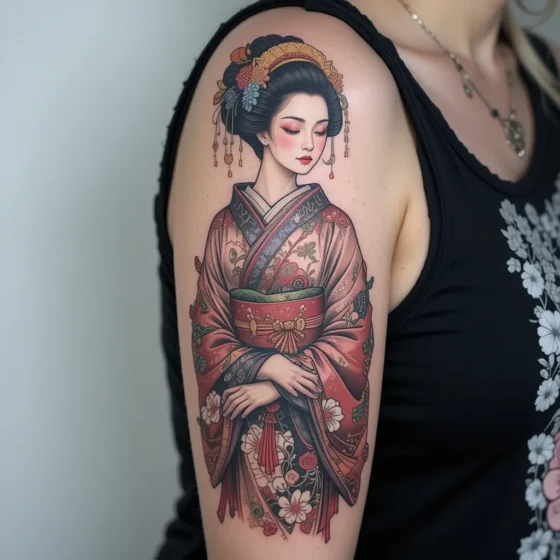
The kimono itself can carry as much visual interest as her face, waves, cranes, chrysanthemums, or geometric patterns worked into the fabric folds give the artist room to add real detail without crowding her expression. This is a strong option for anyone who wants a larger piece with plenty to look at up close.
📌 Good To Know
Pick a pattern that means something to you personally, cranes for longevity, waves for resilience, since it’s easy to lean on it as the design’s real focal point.
11. A Geisha Holding a Traditional Wagasa Umbrella

A geisha holding an open wagasa umbrella, its ribs and paper panels rendered in fine detail, adds both elegance and a sense of shelter to the design. The umbrella’s curve naturally frames her face and shoulders, which makes it a strong choice for placements where you want the eye guided toward a specific spot.
12. A Geisha Paired With a Skull for Stark Contrast

Setting a skull beside or beneath a geisha figure creates one of the starkest contrasts on this whole list, beauty and mortality sitting side by side without either one softening the other. Building this pairing well takes some deliberate choices.
1
Decide whether the skull sits in shadow or shares equal focus.
2
Keep her expression calm rather than distressed for real contrast.
3
Choose black and grey or muted tones over bright color.
13. A Realistic Geisha Portrait in Fine Detail

A highly realistic geisha portrait, rendered with photographic detail in the eyes, skin texture, and fabric folds, demands real skill from an artist and real patience from you in the chair.
This isn’t a design to rush into with whoever has the next available appointment.
Research artists who specialize in realism
Review their healed portrait work first
Booking a generalist based on flash sheets
Rushing the consultation to save time
14. A Geisha With Cherry Blossom Petals Caught in Wind
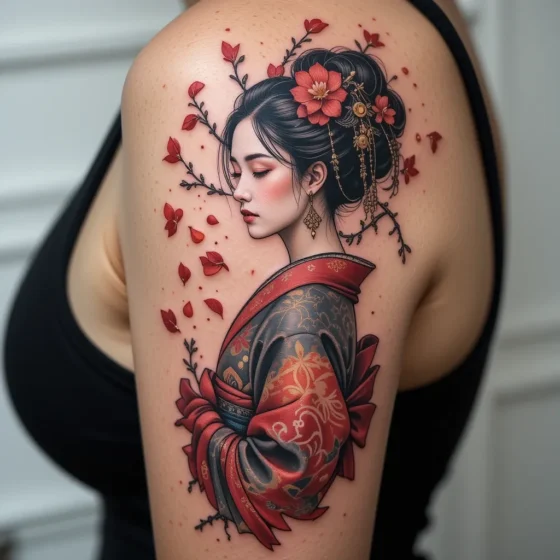
Petals mid flight around a geisha figure, some close, some scattering further out toward the edge of the piece, add genuine movement to what would otherwise be a static portrait. The direction the petals travel should be consistent, since scattering randomly reads as chaotic rather than windswept.
Getting the wind effect right
15. A Geisha Alongside a Koi Fish for Resilience

A koi fish swimming near a geisha’s feet or woven into the background pulls in the fish’s own symbolism, perseverance through difficulty, and pairs it with her composed strength.
The koi doesn’t need to dominate the piece, even a modestly sized fish carries enough visual weight to register clearly.
16. A Geisha With a Serpent Coiled Around Her Shoulder

A snake wrapped around a geisha’s shoulder or arm brings wisdom and rebirth into the design, along with a noticeably bolder, more striking overall look than most of the other pairings on this list.
It reads very differently depending on how tightly the serpent coils.
| Loose Coil | Tight Coil |
|---|---|
| Reads as companion, protective | Reads as tension, more ominous |
| Softer overall mood | Bolder, more dramatic mood |
17. A Geisha Standing Under a Full Moon
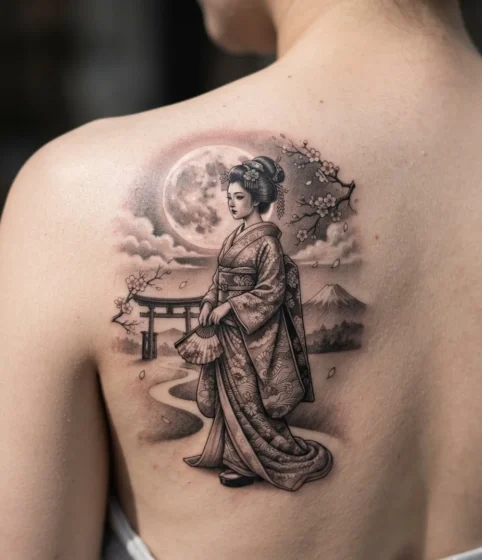
A geisha positioned beneath a full moon, its glow lighting one side of her face while the rest falls into shadow, gives the whole piece a quiet, almost cinematic atmosphere. The moon doesn’t need to be large, sometimes a smaller moon set higher in the composition creates more genuine depth than one that dominates the space.
A portrait with no light source or mood setting.
Gains genuine atmosphere and cinematic depth.
18. A Geisha Beside a Full Cherry Blossom Branch
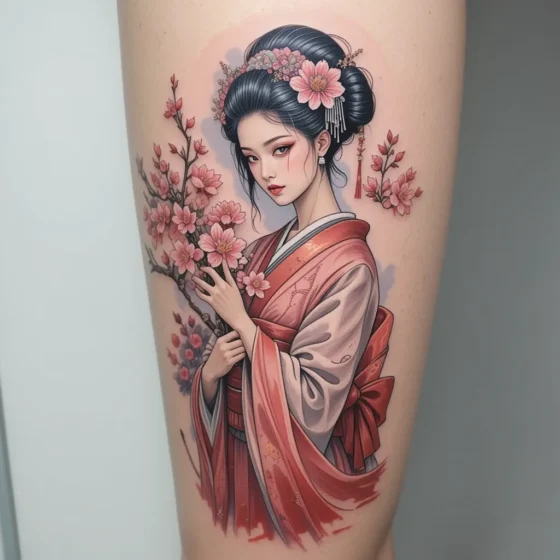
A full branch, rather than scattered loose petals, gives a geisha tattoo a stronger structural element to build the composition around, and it works particularly well for a vertical placement like the spine or the side of a leg.
- ▸A branch works best angled diagonally, not perfectly vertical
- ▸Leave some blossoms in bud rather than fully open
- ▸Pairs naturally with a seasonal color palette
19. A Geisha Whose Face Splits Into a Demon Mask
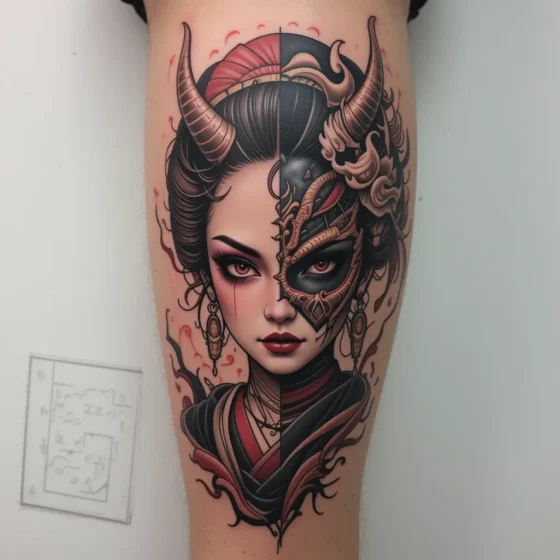
Half her face rendered as a composed, traditional geisha and the other half transforming into a demon or hannya mask captures duality in a single striking image, the calm surface and whatever lies beneath it. The transition between the two halves is what determines whether this design feels intentional or just split down the middle.
Blend the two halves gradually rather than with a hard vertical line, a true split reads as two separate faces.
20. A Geisha Mid Tea Ceremony Ritual

A geisha in the middle of a tea ceremony, hands positioned precisely around the cup, brings patience and ritual into a design that’s otherwise often about posture or appearance alone. It’s a quieter idea than most on this list, built around a moment of focus rather than a dramatic pose.
💡 Quick Tip
Get the hand positioning right before anything else, an inaccurate grip on the tea cup is the detail experienced viewers notice first.
21. A Geisha Holding a Single Lotus Bloom

A single lotus held gently in one hand ties spiritual growth and purity into a geisha tattoo without needing an elaborate background to support the symbolism. Keeping the flower count to just one, rather than a full arrangement, keeps the focus where it belongs, on her.
22. A Geisha Caught in a Floating, Weightless Pose

A geisha rendered mid float, kimono sleeves and fabric trailing as though gravity doesn’t apply, gives the design a dreamlike, almost transcendent quality that a standing portrait can’t match. Getting the fabric movement believable takes some specific choices.
1
Let fabric trail in one consistent direction, not scattered.
2
Keep her expression serene, tension breaks the dreamlike effect.
3
Leave open negative space around her for the floating illusion.
23. A Geisha With an Open Folding Fan

An open folding fan held at chest height, its painted pattern visible rather than hidden behind it, shifts the focus from concealment to craftsmanship, the fan itself becomes a design element worth detailing rather than just a prop covering her face.
Give the fan its own visible, detailed pattern
Let it complement the kimono’s colors
Leaving the fan blank or plain
Wasting the detail opportunity entirely
24. A Geisha Framed Against a Pagoda Backdrop

A pagoda silhouette in the background grounds a geisha tattoo in a specific place and history rather than leaving her floating in an undefined space. The pagoda should stay secondary though, simple linework or muted shading, so it frames her instead of competing with her.
Keeping the background secondary
25. A Geisha With a Butterfly Resting on Her Hand

A single butterfly perched on an outstretched hand or fingertip brings transformation and new beginnings into the design with barely any added visual weight.
It’s a small detail that changes the story of the whole piece without requiring extra space on the canvas.
26. A Geisha Wielding a Katana Sword

A geisha holding a katana rather than a fan or umbrella flips the usual expectation of softness entirely, pairing traditional beauty with an unmistakable edge of danger and self reliance.
The sword’s angle changes the mood significantly.
| Raised Sword | Resting Sword |
|---|---|
| Reads as active, confrontational | Reads as composed, capable |
| Higher visual drama | Quietly powerful mood |
27. A Geisha Standing Before Crashing Ocean Waves

Traditional Japanese wave art behind a geisha figure, curling and cresting the way it does in classic woodblock prints, ties her to a much older visual tradition while adding real energy and movement to the background. The waves should feel like they’re actually in motion, not just decorative texture filling empty space.
A geisha portrait with no surrounding context.
Gains drama, movement, and cultural depth.
Final Thoughts
A geisha tattoo carries the most weight when the artist treats her as more than decoration, giving her a mood, a story, or a symbol to interact with instead of a static pose repeated with a different background each time.
Whether you go traditional with full color and ceremonial detail or strip it down to a single minimalist line, the strongest versions on this list all commit to one clear idea rather than trying to include everything at once.
Bring your favorite concept to a consultation, ask about placement and how the fine detail will age, and let your artist adjust the composition to fit your own body. Save this list for whenever you’re ready to plan the piece.