Signs of an Infected Tattoo You Should Never Ignore
Getting a tattoo is exciting, but what comes after the needle stops is just as important as the art itself.
Most people walk out of the studio with aftercare instructions and good intentions — but even with the best routine, infections can sneak up on you. The tricky part?
Early infection symptoms look a lot like normal healing, which is exactly why so many Americans wait too long to act.
This guide breaks down every real warning sign of an infected tattoo, what separates a healing tattoo from an infected one, and what you should do the moment something feels wrong.
That Redness Isn’t Always Normal — Here’s How To Tell the Difference
Some redness after getting a tattoo is completely expected — your skin just went through thousands of needle punctures in a short period of time.
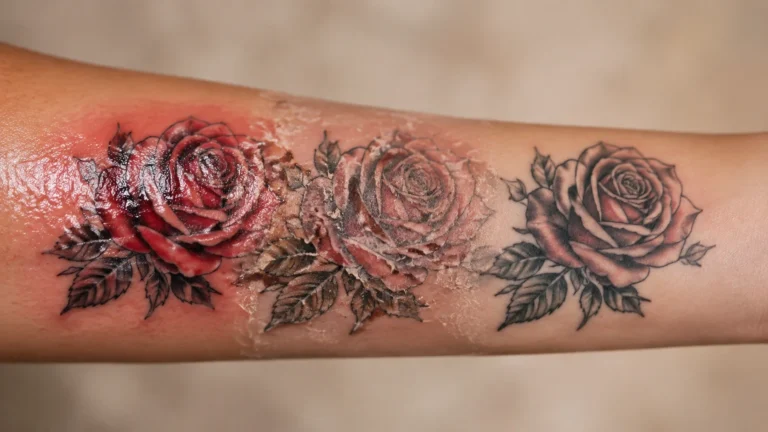
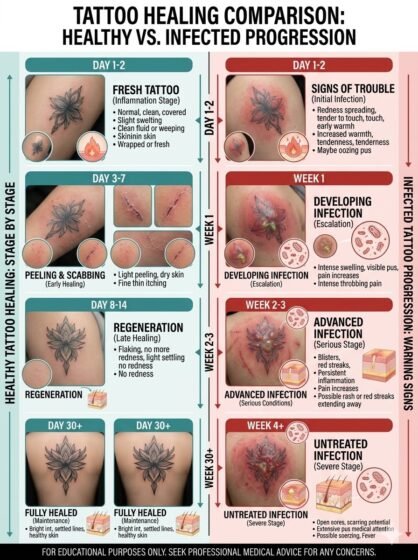
The redness that signals infection, however, behaves very differently from healing redness. Normal post-tattoo redness fades significantly within 48 to 72 hours and stays close to the tattooed area.
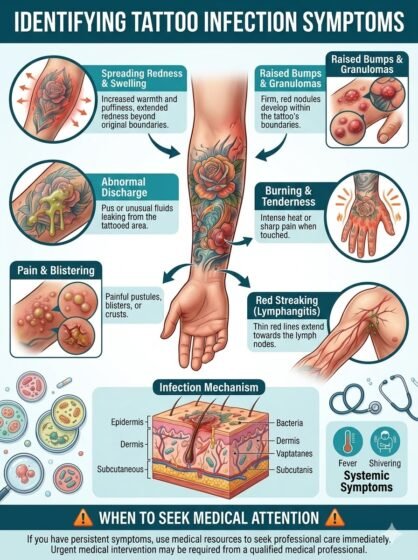
Infected redness spreads outward beyond the tattoo’s edges, deepens in color over time instead of fading, and often feels hot to the touch even days after your session.
If you’re pressing a finger near your tattoo and the skin feels noticeably warmer than the surrounding area on day four or five, that’s your body’s inflammation response fighting something it doesn’t like — and it deserves your attention.
Swelling That Sticks Around Way Too Long Is a Red Flag
Mild swelling in the first one to three days is your immune system doing exactly what it’s supposed to do. Blood flow increases to the area, white blood cells rush in, and the tissue puffs up slightly as part of the healing cascade.
What isn’t normal is swelling that gets worse after day three, that feels tight and hard under the skin, or that spreads visibly beyond the tattoo outline. Infected swelling often comes with a sensation of pressure or throbbing beneath the surface not just surface-level tenderness.
If your tattoo still looks puffed up and angry heading into the second week, don’t write it off as slow healing without ruling out infection first.
The Discharge Your Tattoo Should — and Should Never — Produce
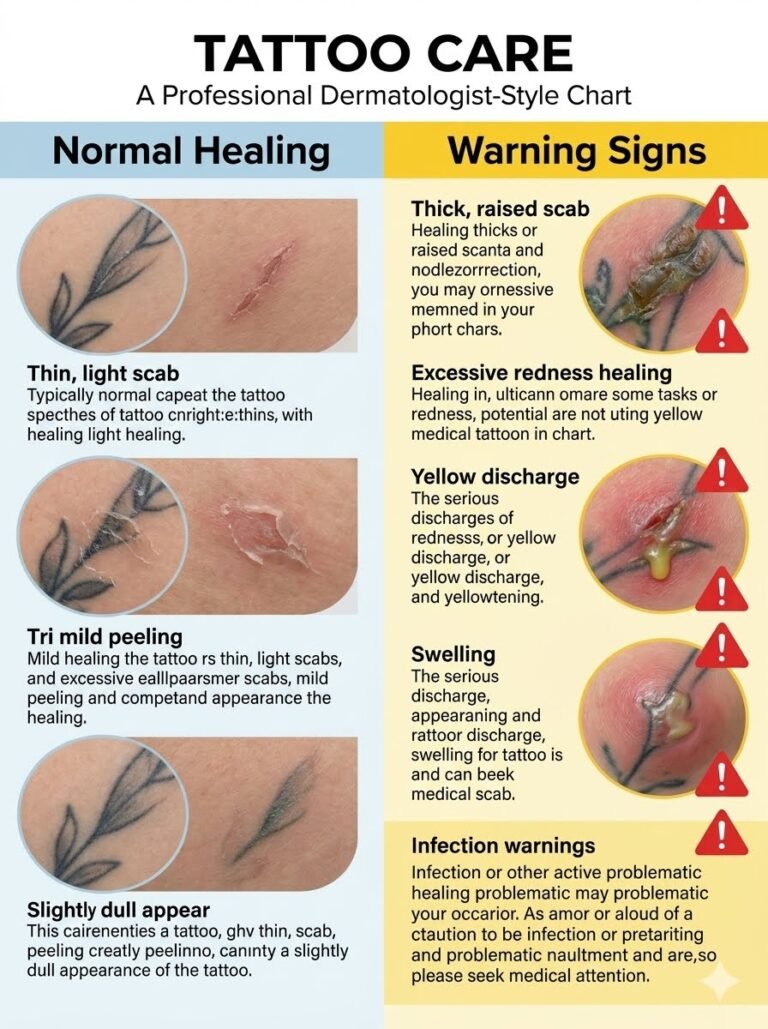
In the first day or two, a fresh tattoo naturally weeps a mix of plasma, blood, and ink. This clear or slightly pinkish fluid is called serous discharge, and it’s completely normal.
What is not normal is discharge that turns yellow, green, or gray — or that develops a foul, unpleasant odor.
Pus in any form is your body’s sign that bacteria have set up camp beneath the skin and your immune system is actively fighting them.
Some people describe infected discharge as thick, cloudy, and slightly sweet-smelling which sounds harmless but is actually one of the clearest biological indicators of bacterial infection.
If your tattoo is producing anything other than clear fluid past day two, take it seriously.
Fever and Chills After a Tattoo Appointment Are Not Coincidences
A tattoo that gets infected doesn’t always stay a localized skin problem — it can become a systemic one. When bacteria penetrate deep enough into the tissue, your body raises its core temperature to create an environment hostile to infection.
If you find yourself running a fever of 100.4°F or higher, experiencing chills, feeling fatigued, or having body aches in the days following your tattoo session, connect those dots immediately.
These systemic symptoms mean the infection may have entered your bloodstream — a condition called septicemia that requires urgent medical care. This is not a “wait and see” situation. A fever following a tattoo appointment is a medical emergency until proven otherwise.
Red Streaks Radiating From Your Tattoo Mean Go to the ER Now
This one symptom has no gray area: if you see red streaks extending outward from your tattoo like lines under the skin, go to an emergency room immediately.
These streaks — medically known as lymphangitis — indicate that an infection has entered your lymphatic system and is spreading through your body.
They typically appear as thin red lines running from the tattoo toward the nearest lymph node, such as the armpit, groin, or neck depending on tattoo location.
This is one of the most serious signs that a localized skin infection has escalated into a life-threatening condition. Do not apply more ointment, do not wait for a primary care appointment — go directly to emergency care.
Intense, Burning Pain That Gets Worse Instead of Better
Tattoo pain is expected while the needle is running, and tenderness for a few days afterward is part of the deal. But pain that intensifies after day three — instead of gradually subsiding — is one of the body’s clearest distress signals.
Infected skin produces a burning, throbbing, or deep aching sensation that is qualitatively different from normal soreness.
You might notice the pain wakes you up at night, makes clothing contact unbearable, or pulses in rhythm with your heartbeat. This type of escalating pain paired with any of the other symptoms listed here points strongly toward infection.
Pain that gets worse over time is never something to rationalize away — your nervous system is communicating clearly.
Raised, Hard Bumps and Blisters That Appear Days After the Session
Small raised bumps appearing around a new tattoo can mean several things, but infected bumps have a very specific look and feel. Infected tissue often develops firm, painful nodules or fluid-filled blisters that weren’t present in the first day or two.
These can be caused by bacterial infections like Staphylococcus aureus — including MRSA, which is antibiotic-resistant and more common than most people realize.
Blisters that rupture and release cloudy or colored fluid are particularly concerning.
It’s also worth noting that some bumps may indicate an allergic reaction to ink rather than a bacterial infection — but either scenario requires professional evaluation, as the treatment approaches are completely different.
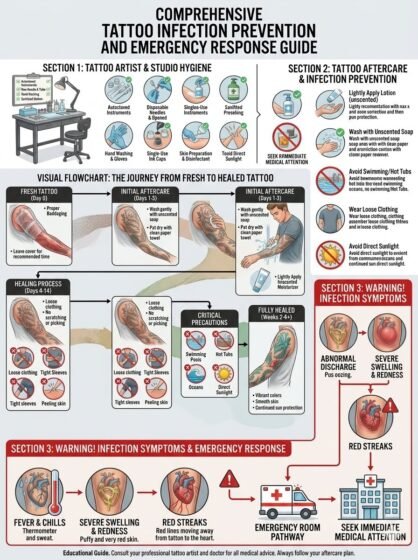
Your Tattoo Artist’s Hygiene Practices Directly Impact Your Infection Risk
Where you get tattooed matters as much as how you care for it afterward. Reputable studios in the US are required to follow strict health and safety protocols — single-use needles, autoclave sterilization of reusable equipment, disposable ink caps, and artists working with fresh gloves for every client.
Infections acquired in the studio environment are often caused by non-sterile equipment, contaminated ink, or cross-contamination between clients.
Before your next session, verify that your chosen studio has a visible health department license, that the artist opens needle packages in front of you, and that surfaces are wiped down between clients.
Cutting costs by choosing an unlicensed artist is one of the fastest ways to end up in an urgent care clinic.
When To See a Doctor and What To Actually Tell Them
If you’re experiencing two or more of the symptoms above, it’s time to stop self-treating and see a medical professional.
When you go, be specific: tell them when you got the tattoo, what studio you went to, how you’ve been caring for it, and which symptoms appeared and in what order.
A doctor will likely swab the area to identify the specific bacteria responsible before prescribing antibiotics, since broad-spectrum treatment isn’t always effective — especially against MRSA strains.
Never try to drain infected skin yourself, and don’t apply over-the-counter antibiotic creams as a substitute for medical care when symptoms are progressing. The earlier you seek treatment, the lower your risk of permanent scarring, ink loss, or serious systemic illness.
Final Thoughts
An infected tattoo is not something to be embarrassed about or push through alone — it’s a medical situation that deserves real attention.
Millions of Americans get tattooed every year, and the vast majority heal without a single complication.
But knowing the difference between a tattoo that looks rough and a tattoo that’s actually infected could protect your health, your artwork, and in serious cases, your life.
Trust your instincts — if something feels wrong, it probably is. Your tattoo artist gave you art; a doctor gives you the all-clear. Don’t hesitate to get both when you need them.