Tattoo Cover Guide: How To Hide, Heal, and Protect Your Ink Like a Pro
Whether you’re heading into a job interview, a family wedding, or just want a break from the stares knowing how to cover a tattoo correctly is a skill every tattooed American should have. But covering ink isn’t just about slapping on a bandage or layering concealer over your forearm.
Done wrong, you can damage a healing tattoo, trigger a skin reaction, or end up with a patchy, obvious cover that draws more attention than the tattoo itself.
This complete tattoo cover guide walks you through every method, every product, and every situation — so your ink stays your business, exactly when you want it to.
Why Covering a Tattoo Correctly Actually Matters More Than You Think
Covering a tattoo isn’t purely cosmetic — it’s also about protection. Fresh tattoos are open wounds, and exposing them to friction, sunlight, bacteria, or harsh chemicals during the healing phase can cause serious damage to both your skin and your artwork.
Even healed tattoos benefit from proper coverage in certain environments like direct sunlight, chlorinated pools, or dusty workplaces.
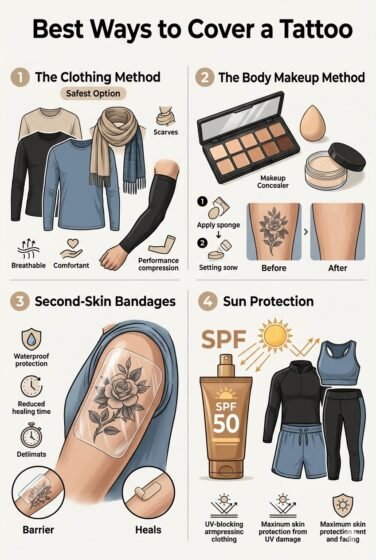
Understanding the difference between covering for appearance versus covering for protection changes the products and methods you should reach for.
Getting this wrong — especially on a fresh tattoo — can lead to infection, ink fallout, and costly touch-ups that could have been entirely avoided.
The Clothing Method: Your Easiest, Skin-Safe First Option
When in doubt, cover with fabric — it’s free, breathable, and completely safe for both new and healed tattoos. Long sleeves, high-neck tops, compression sleeves, and maxi skirts are go-to choices depending on tattoo placement.
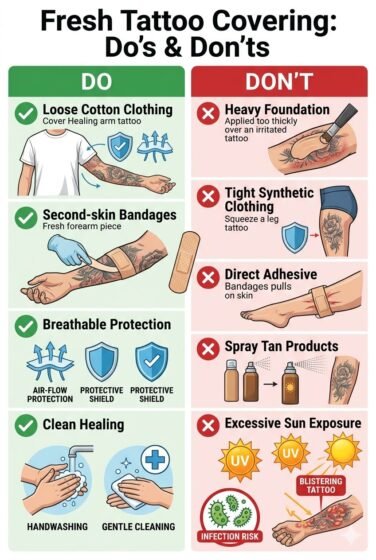
For fresh ink, opt for loose, soft, natural fabrics like cotton that won’t cling to or drag across the healing skin.
Avoid tight synthetic materials that trap heat and moisture against a new tattoo. For workplace settings, a well-fitted blazer or cardigan can conceal arm and shoulder tattoos without any skin contact concerns.
The clothing method requires zero products and zero prep — making it the smartest starting point before reaching for makeup or bandages.
Tattoo Cover-Up Makeup: What Actually Works and What’s a Waste of Money
Not all concealer is created equal, and standard drugstore foundation will not hide a saturated tattoo — full stop. For effective makeup coverage, you need full-coverage, highly pigmented products specifically formulated for body use.
Top-performing options in the US market include Dermablend Leg and Body Makeup, KVD Good Apple Full-Coverage Foundation, and Kat Von D’s Lock-It Body Foundation — all of which are designed with the opacity needed to neutralize dark ink.
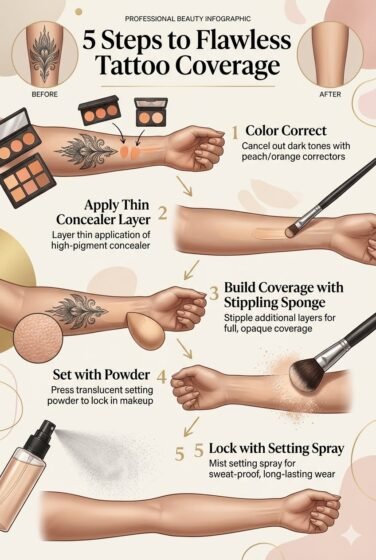
The application technique matters just as much as the product: start with a color-correcting base (orange tones cancel blue-black ink, peach tones cancel green and gray), build coverage in thin layers, and always set with a translucent or setting powder to prevent transfer onto clothing.
How To Apply Body Concealer Without It Looking Cakey or Obvious
The biggest mistake people make with tattoo makeup is applying too much product at once. Thick, single-layer application looks heavy, cracks when you move, and transfers onto everything you touch.
Instead, apply a thin base layer with a dense makeup sponge using a stippling — not rubbing — motion. Let each layer dry for 60 seconds before adding the next.
Two to three thin layers will always outperform one thick one. Blend the edges carefully into the surrounding skin so there’s no visible line of demarcation.
Finish with a generous dusting of setting powder, followed by a makeup setting spray for all-day hold. Done right, professional body makeup coverage can last 8 to 12 hours through normal activity.
Tattoo Cover Bandages and Medical Tape: When and How To Use Them
For fresh tattoos or situations requiring physical protection rather than cosmetic coverage, specialized bandages are the right tool.
Second-skin bandages — also called tattoo film or transparent wound dressings — are widely used in the US and recommended by many artists for the first few days of healing.
Brands like Saniderm, Tegaderm, and Recovery Derm Shield create a breathable, waterproof barrier that protects the tattoo while allowing it to heal without air exposure. These are not cosmetic covers — the tattoo is still visible through the film — but they protect against clothing friction, bacteria, and water.
For opaque physical coverage, medical-grade silicone tape layered over a non-stick gauze pad works well for short-term concealment without irritating new skin.
Covering Tattoos for Job Interviews and Professional Settings in the US
Workplace tattoo policies vary wildly across the United States, but first impressions still carry weight in many industries.
Healthcare, legal, corporate finance, and government roles tend to have stricter visible tattoo policies than creative, tech, or trade fields. Rather than stressing about permanent removal, know your coverage options and plan ahead.
For hand and wrist tattoos in formal settings, long-sleeved dress shirts or blouses paired with a watch or bracelet can provide natural concealment.
Neck tattoos are trickier — high-collared shirts, turtlenecks, or scarves work depending on the season. Preparation beats improvisation every time, so test your cover method at home before the actual interview to confirm it holds and looks natural under office lighting.
Sun Protection and Tattoo Coverage: Two Goals, One Solution
Covering your tattoo from UV exposure is one of the most important long-term care steps you can take for your ink. Ultraviolet rays break down tattoo pigment faster than almost anything else — causing colors to fade, blacks to turn greenish, and fine lines to blur over time.
For healed tattoos, a broad-spectrum SPF 50 sunscreen applied 20 minutes before sun exposure is the gold standard.
For fresh tattoos, skip the sunscreen and use physical coverage clothing or bandages since most sunscreen formulas contain ingredients too irritating for broken skin.
Mineral sunscreens with zinc oxide are the gentlest option once a tattoo is fully healed, as they sit on top of the skin rather than being absorbed into it.
Covering Tattoos for Special Events: Weddings, Funerals, and Family Gatherings
Special occasions in America often call for a more polished look, and not every family member or guest needs a front-row view of your ink. For weddings where the dress code is formal, body makeup combined with setting spray is your most reliable option for arms, chest, and décolletage tattoos.
For outdoor summer events where sweat and humidity are factors, waterproof body foundations paired with a translucent setting powder dramatically extend wear time. Keep a small touch-up kit — a travel-size concealer, powder, and setting spray — in your bag for long events.
Testing your full coverage routine at least two days before the event gives you time to adjust products, fix technique issues, and confirm the coverage survives movement and clothing contact.
The Products You Should Never Use To Cover a Fresh Tattoo
Some cover-up shortcuts can do serious damage to healing skin, and knowing what to avoid is just as important as knowing what works.
Never apply regular face foundation directly to a fresh tattoo — the formulas are not designed for open skin and can introduce bacteria or clog the wound.
Avoid spray tans and self-tanners on new ink, as the chemicals interact unpredictably with healing tissue and can permanently stain uneven patches.
Heavy theatrical makeup not designed for skin contact can cause allergic reactions and block the natural moisture exchange a healing tattoo needs. Adhesive bandages with strong glue strips can tear fresh scabs when removed, pulling ink out with them. When a tattoo is still healing, less is always more.
Final Thoughts
Covering a tattoo — whether it’s fresh, fully healed, or somewhere in between — is completely manageable when you use the right method for the right situation.
Fabric is your safest and simplest option, professional body makeup delivers the most seamless cosmetic result, and protective bandages are non-negotiable for fresh ink in demanding environments.
The US tattoo community has never had more high-quality, accessible cover products available than it does right now, so there’s no reason to feel stuck between your ink and your lifestyle.
Own your tattoos on your own terms — show them when you want, cover them when you need to, and always protect them like the permanent investment they are.