Tattoo Scabbing Guide: Your Tattoo Is Peeling Here’s What To Do
If your fresh tattoo is scabbing, don’t panic. Scabbing is one of the most misunderstood parts of the tattoo healing process, and nearly every first-timer makes at least one mistake during this phase.
Whether your ink looks crusty, dull, or patchy right now, this complete tattoo scabbing guide will walk you through everything you need to know — from why it happens to how to protect your artwork for years to come.
Why Your Tattooed Skin Forms Scabs in the First Place
When a tattoo needle punctures your skin thousands of times per minute, it creates real wounds in the dermis layer. Your immune system immediately responds by sending plasma, white blood cells, and clotting agents to the surface.
This biological response is what forms scabs — a natural protective crust that shields the healing tissue underneath. Think of scabbing less as a problem and more as proof that your body is doing its job correctly.
The ink deposited during your session sits just below this healing layer, which is why protecting scabs matters so much for the final appearance of your tattoo.
Normal Scabbing vs. Thick, Raised, Dangerous Scabs
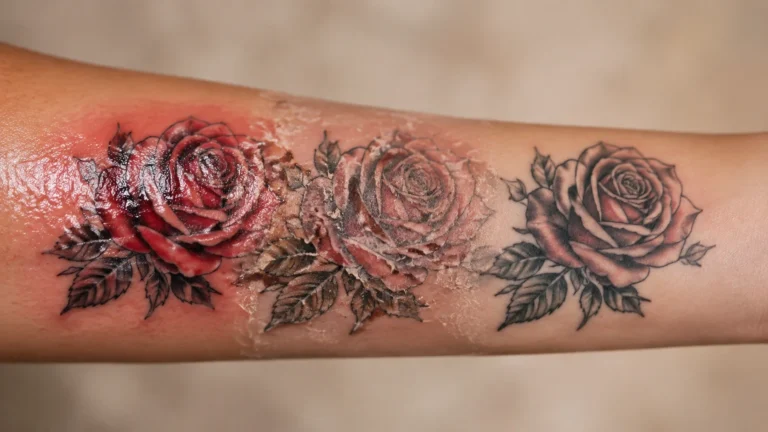
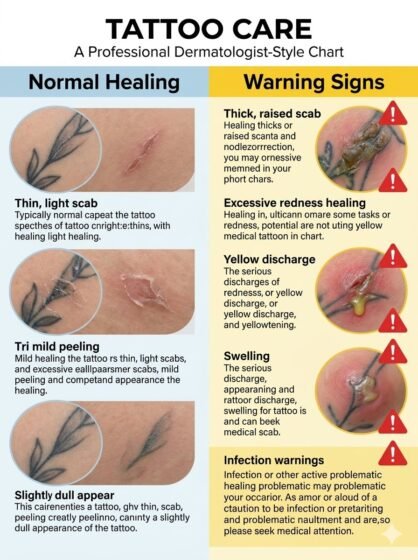
Not all scabbing looks the same, and knowing the difference can save your tattoo. Normal scabbing appears as thin, slightly raised flakes that may have a yellowish or brownish tint — often forming within 3 to 5 days after your session.
Thick, raised, or deeply colored scabs, on the other hand, can signal over-moisturizing, infection, or aggressive trauma to the skin during the session.
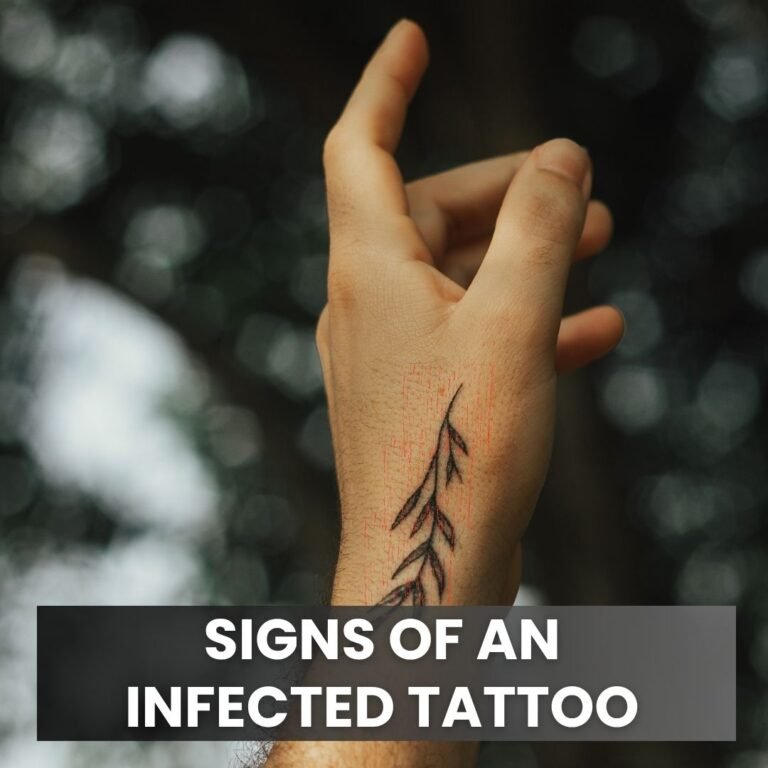
If your scabs are bubbling, oozing green or yellow fluid, or surrounded by spreading redness, contact your artist or a dermatologist immediately. Catching an infection early is the difference between a perfect heal and a costly touch-up.
The Tattoo Healing Timeline You Actually Need to Know
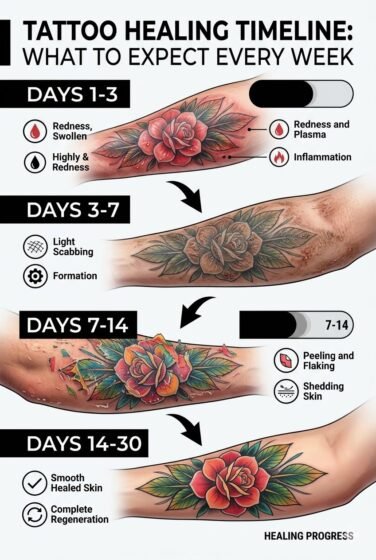
Understanding when scabbing starts — and when it should stop — helps you avoid unnecessary worry. Here’s a straightforward breakdown:
Days 1–3: Redness, swelling, and clear or blood-tinged plasma oozing from the skin.
Days 3–7: Surface begins to dry out; light scabbing and peeling start to develop.
Days 7–14: Scabs begin flaking naturally; the skin may look dull or milky underneath.
Days 14–30: Outer skin heals completely; deeper layers continue repairing for up to 3 months.
Knowing this timeline prevents you from freaking out mid-heal when your tattoo looks its absolute worst — which, for the record, is usually around day 5 to 8.
The #1 Mistake Americans Make During Tattoo Scabbing
Across tattoo studios from New York to Los Angeles, artists agree on one universal truth: people pick their scabs. It feels almost involuntary — the scab is tight, itchy, and peeling at the edges.
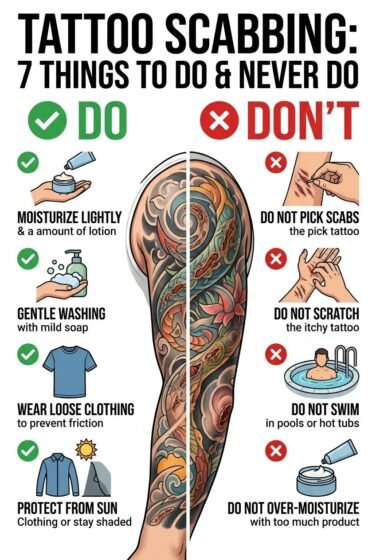
But picking or scratching a scab pulls out ink that hasn’t fully anchored in the dermis yet, leaving behind faded patches, uneven color, and sometimes small scars. Your patience during this phase directly determines whether you’ll need a free touch-up or pay for a full color correction later.
Keep your hands busy, keep your tattoo moisturized, and let the scabs fall off on their own schedule.
How To Moisturize Without Suffocating Your Healing Tattoo
Moisture is your tattoo’s best friend during scabbing — but too much of it is the enemy. Over-moisturizing traps bacteria, softens scabs prematurely, and creates the perfect environment for ink to leach out.
Apply a thin layer of unscented lotion or tattoo-specific aftercare balm two to three times daily, just enough to keep the skin from cracking.
Popular choices in the US include Lubriderm, Aveeno, or artist-recommended products like Aquaphor (used sparingly in the early days). Avoid petroleum-heavy products in thick amounts — a shiny, suffocated tattoo is not a healed tattoo.
Showering, Swimming, and Sun Exposure During the Scab Phase
Water and sunlight are two of the biggest threats to a scabbing tattoo. Short, lukewarm showers are perfectly fine, but submerging your tattoo in a bathtub, pool, ocean, or hot tub can waterlog scabs, strip ink, and introduce bacteria into an open wound.
Keep shower time to under 10 minutes and avoid directing the water stream directly onto the tattoo. As for sunlight, UV rays break down tattoo ink and damage healing skin simultaneously — a double hit your fresh work simply cannot afford.
Cover up with clothing outdoors and skip the sunscreen until the skin has fully closed, as most sunscreens contain ingredients too harsh for broken skin.
What Itching Really Means and Safe Ways To Deal With It
That maddening itch you feel around days 7 to 12 is actually great news — it means your nerves are regenerating and new skin cells are forming. The itch is intense precisely because the healing is progressing rapidly underneath the scab layer.
Scratching is off-limits, but you have options: gently slap the area with a clean hand to disrupt the itch signal, apply a thin layer of fragrance-free lotion, or use a cool (not cold) compress for 5 to 10 minutes.
Some people find that keeping the tattoo covered with loose, breathable clothing reduces the urge to scratch by removing visual and tactile temptation.
Signs Your Tattoo Is Healing Perfectly (Even When It Looks Terrible)
Healing tattoos are genuinely ugly before they’re beautiful, and most people mistake a perfectly normal heal for something going wrong.
Dull, milky, or cloudy-looking ink during weeks two and three is called “onion skin” — a thin layer of new epidermis forming over the tattoo. The colors will re-saturate once this layer fully sheds.
Light flaking that resembles a peeling sunburn is completely normal. Even slight puffiness around bold line work during the first week is expected. The only red flags are fever, intense heat radiating from the tattoo, green or foul-smelling discharge, and red streaks extending outward from the tattooed area.
Tattoo Scabbing on Different Body Parts Heals Differently
Where your tattoo is located on your body significantly affects how it scabs and heals. Areas with high friction — like the inner arm, ribs, hands, or feet — tend to develop heavier scabbing and take longer to fully settle.
Joints like elbows and knees are in near-constant motion, which stresses healing skin and may cause ink to push out slightly during the scab phase.
Fleshier areas like the thigh or upper arm typically heal the smoothest. If your tattoo is in a high-friction zone, consider wearing loose, soft clothing over it and reapplying aftercare more frequently to prevent cracking.
Final Thoughts
Tattoo scabbing is not a sign that something went wrong — it’s a sign that your body is working exactly as it should. The healing journey from raw, swollen skin to vibrant, settled ink takes patience, consistency, and a willingness to leave your tattoo alone when every instinct tells you to pick at it.
Follow the aftercare instructions your artist gave you, keep the area clean and lightly moisturized, protect it from the sun and water, and trust the process.
Your skin has been healing itself your entire life — give it the right conditions, and your tattoo will come out exactly the way you envisioned it. And if something ever feels truly off, your tattoo artist and a licensed dermatologist are always your best resources.