Tattoo Healing Stages Week by Week: What’s Normal and What’s Not
Every tattoo goes through the same general healing process, though the exact timeline can shift depending on placement, size, your own skin, and how closely you follow aftercare.
Knowing what to actually expect week by week helps you tell the difference between normal healing and something that genuinely needs attention, rather than guessing or panicking over something completely typical.
This guide walks through the full tattoo healing timeline, from the first day through complete healing beneath the surface, plus the factors that speed things up or slow them down, common aftercare mistakes, and how to tell normal healing from something worth a second look.
As a tattoo artist, I get asked some version of “how long does a tattoo take to heal” in nearly every consultation, so this covers the complete picture rather than just one piece of it.
How Long Does a Tattoo Take to Heal? (Surface vs Deep Healing)
A tattoo actually heals in two distinct layers, and this is the part most people do not realize going in.
The epidermis, the thin outer layer of skin, typically closes and finishes visible healing within two to three weeks. The dermis, the deeper layer where the ink itself actually sits, takes considerably longer, generally another two to five months to fully settle beneath the surface.
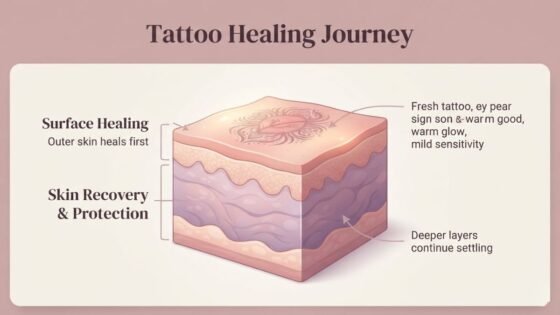
This two-layer process is why a tattoo can look completely healed on the outside within a few weeks while still technically healing underneath.
The surface layer regenerates relatively quickly since skin cells there turn over fast, but the dermis contains blood vessels, collagen, and the actual ink particles, and repairing that deeper tissue simply takes more time.
Treating the tattoo gently well past the point it looks finished genuinely matters for how the color saturation and linework crispness hold up over the following years.
Factors That Affect Your Tattoo Healing Time
Not every tattoo heals on exactly the same schedule, and several real factors genuinely influence how quickly yours settles.
Size and detail level matter first. A small, simple line-work piece generally heals faster than a large, heavily shaded or solid-color piece, since more trauma to the skin means more repair work overall.
Placement matters just as much, areas with more movement, joints, hands, feet, and ribs specifically, tend to heal slower since the skin stretches and flexes constantly during the process. Your own skin type, age, and general health also play a real role, since faster natural cell turnover and a well-functioning immune system both support quicker healing.
Finally, how closely you actually follow aftercare instructions has a genuinely significant impact, since skipping steps or over-treating the area can extend healing time noticeably.
What genuinely speeds up or slows down healing
Tattoo Healing Timeline: Week by Week Breakdown
Week 1
The first week is when a tattoo looks and feels the most dramatic, and it typically unfolds in a fairly predictable pattern day by day.
Days one and two bring the most visible redness, swelling, and warmth around the area, all genuinely normal responses as your skin reacts to the trauma of tattooing itself.
Some oozing of plasma, excess ink, and a small amount of blood is expected during this window specifically, and your artist’s bandage or wrap is there to manage exactly this.
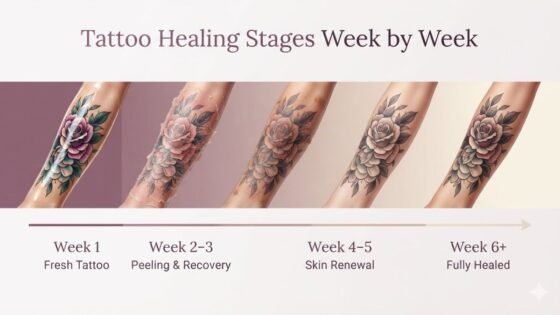
Days three and four usually bring a noticeable reduction in swelling, though the area often still feels tender and warm to the touch. By days five through seven, light scabbing typically begins to form across the design, and the area may start to itch as new skin works its way in underneath.
What’s normal in week 1
Week 2
Peeling and flaking genuinely ramp up during week two, similar to a mild sunburn peeling, as the epidermis works through shedding the healing skin sitting on top of the tattoo.
Itching is often at its most intense during this stage specifically, since new skin cells forming underneath the scabbing naturally trigger a histamine response.
Resist scratching directly at all costs, since pulling at healing skin can genuinely pull ink out unevenly and leave visible gaps or patchiness in the final piece.
Some small scabs may flake off in the shower or while changing clothes, which is completely normal, though larger pieces of scab should never be picked or forced off manually.
💡 Quick Tip
Pat or gently slap an itchy tattoo instead of scratching it, and apply a thin layer of fragrance-free moisturizer to help ease the sensation without disturbing the skin underneath.
Week 3
Most of the visible flaking has usually finished by week three, and the skin often looks a little shiny or tight as it continues settling into its new texture.
Colors can look slightly duller or cloudy at this stage, almost like a thin film sitting over the design, which is genuinely normal and temporary rather than a sign the ink has faded permanently.
This cloudiness typically fades within the following few weeks as the skin’s top layer fully finishes turning over and the true color underneath becomes visible again. Itching should be noticeably reduced compared to week two, though some mild dryness is still expected.
Keep applying a light, unscented moisturizer.
Genuinely normal, clears within a few more weeks.
Week 4 to 6
By week four to six, the surface of the tattoo usually looks fully healed, smooth, matte, with the scabbing and flaking process complete and the skin’s texture back to close to normal.
This is where many people assume healing is finished entirely, since the tattoo genuinely looks done from the outside.
The deeper dermis layer, however, is still working through its own, slower healing process well beneath what you can actually see, continuing to repair collagen structure and stabilize the ink particles in their final resting position.
Some artists recommend a touch-up session no earlier than this point specifically, since assessing the healed result before this stage can be misleading.
Months 2 to 6 (Full Healing)
Beyond the six-week mark, the tattoo continues healing quietly beneath the surface for several more months, generally until somewhere between month two and month five for most people, though this can extend slightly longer for larger or more heavily saturated pieces.
During this stretch there is genuinely nothing visible happening day to day, no more peeling, no more scabbing, but the dermis is still completing its repair, stabilizing blood flow around the ink, and settling collagen back into place.
Sun protection matters considerably during this entire window, and honestly for the life of the tattoo afterward, since UV exposure genuinely fades ink faster than almost any other single factor.
📌 Good To Know
Sun protection matters for the entire life of a tattoo, not just the healing window, since UV exposure fades ink faster than almost anything else.
Normal Healing vs Signs to Watch For
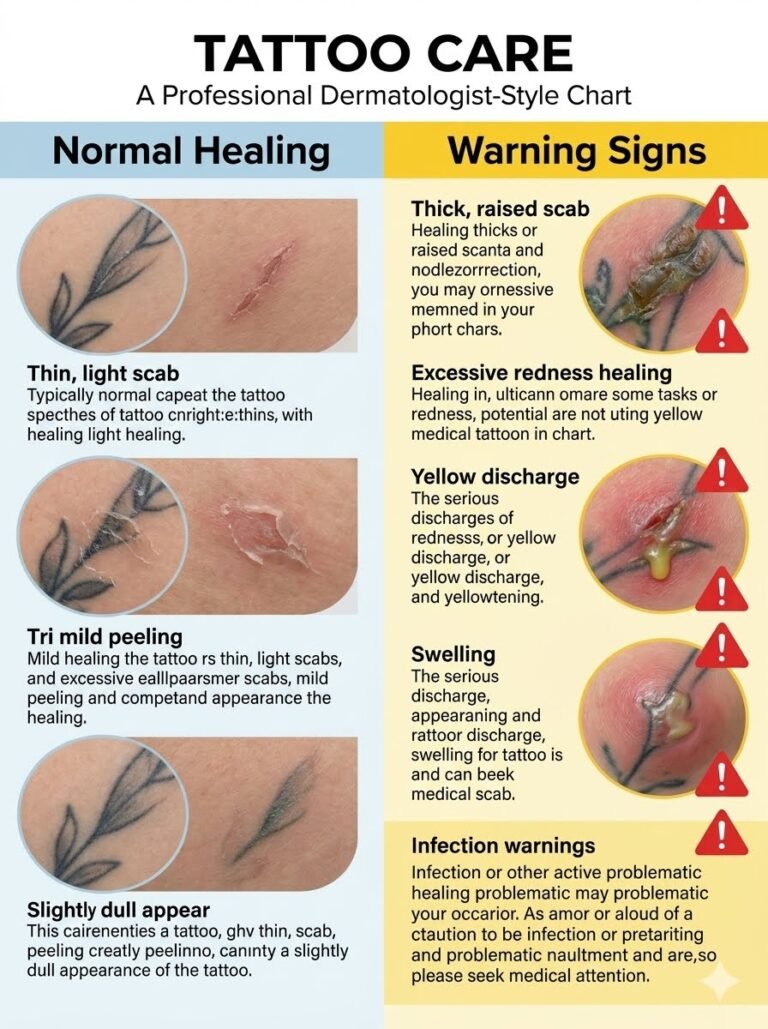
Most of what a tattoo goes through, redness, swelling, itching, peeling, mild tenderness, is a normal part of the process rather than a sign anything is wrong, and it is worth not panicking over typical symptoms that simply look dramatic in the moment.
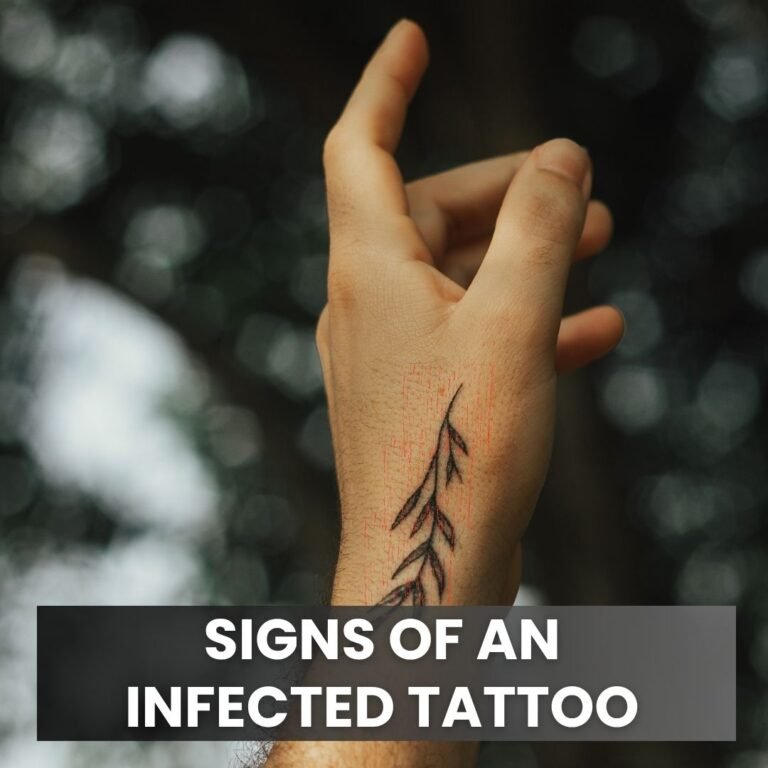
Certain signs fall outside typical healing and are worth paying closer attention to. Redness or swelling that spreads well beyond the tattoo’s actual edges, pain that gets noticeably worse rather than gradually improving day over day, excessive warmth radiating from the area, visible pus, red streaking away from the tattoo, or fever can point to an infection rather than normal healing.
Separately, a rash, raised bumps confined specifically to areas of certain ink colors, or intense itching that develops well after the initial healing window can point to an allergic reaction to a specific pigment rather than the tattoo itself. Both situations are different from ordinary healing discomfort and are worth having looked at properly rather than waiting them out.
| Normal Healing | Worth Watching |
|---|---|
| Redness at the tattoo itself | Redness or streaking spreading beyond the edges |
| Mild itching, especially week 2 | Pain that worsens rather than improves |
| Light oozing in the first day or two | Pus, excessive warmth, or fever |
| Mild dryness through week 3 or 4 | A rash or raised bumps limited to one ink color |
Common Tattoo Aftercare Mistakes to Avoid
A handful of well-meaning mistakes genuinely slow down healing more than people realize, and most of them are easy to avoid once you know what to actually look out for.
Picking or scratching at scabs is the most common issue, since it can pull ink out unevenly and leave patchy spots once fully healed.
Over-applying thick ointment is a close second, since a heavy layer traps moisture against the skin and can actually promote excess scabbing rather than prevent it.
Soaking the tattoo in a bath, pool, or hot tub before it has finished the surface healing stage introduces genuine infection risk, and direct sun exposure during healing can cause real irritation and long-term fading.
Finally, switching aftercare products constantly, trying a new lotion or ointment every few days, tends to irritate healing skin more than sticking with one simple, consistent routine.
Picking or scratching at scabs.
Over-applying thick ointment layers.
Soaking or direct sun before healed.
Let scabs flake off naturally.
Apply a thin, even layer only.
Stick to showers, avoid soaking or sun.
Does Tattoo Placement Affect Healing Time?
Placement genuinely changes how a tattoo heals, sometimes considerably, since different areas of the body have different skin thickness, blood flow, and exposure to friction or movement.
Hands and feet tend to heal slower and can be messier during the process, since these areas naturally shed skin cells faster and experience constant friction from shoes, socks, and everyday use.
Joints, elbows, knees, and areas near the wrist specifically, also heal slower since constant bending stresses healing skin and can cause more cracking or scabbing to reopen.
Ribs, though not particularly slow to heal, can be more uncomfortable during the process since clothing rubs directly against the area throughout the day. Areas with less friction and movement, like the outer thigh or upper arm, generally heal the most predictably of anywhere on the body.
Placement and healing speed
Tattoo Aftercare Tips for Faster Healing
Keep the tattoo clean with a gentle, fragrance-free soap and lukewarm water, washing it gently once or twice a day and patting rather than rubbing the area dry afterward.
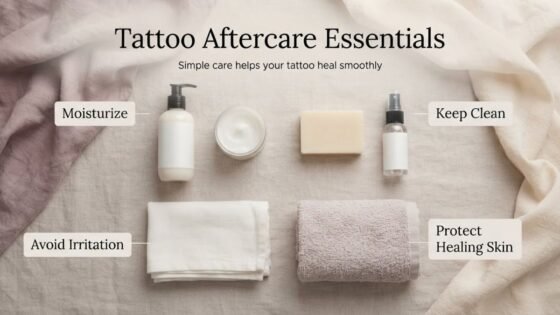
Apply a thin layer of the aftercare product your artist actually recommends, since over-applying ointment can trap moisture and slow healing rather than help it. Switch to a lighter, fragrance-free lotion once the initial scabbing phase passes, typically around week two or three. Avoid soaking the tattoo, swimming pools, baths, and direct sun exposure specifically, until it has fully finished the surface healing stage, and wear loose, breathable clothing over the area to reduce friction during the early weeks.
A thin layer of aftercare product genuinely heals better than a thick one, since over-applying can trap moisture and slow things down.
Final Thoughts
Tattoo healing genuinely happens in stages, and knowing what to expect week by week, along with which factors speed things up or slow them down, makes the whole process considerably less stressful to go through.
The visible healing you see in the mirror within a few weeks is really just the first layer, the real healing continues quietly underneath for months afterward.
Follow your artist’s specific aftercare instructions closely, since they know your particular piece, placement, and skin best, and reach out to them directly if anything about your healing looks or feels different from what this guide describes.
Frequently Asked Questions
How long does a tattoo take to heal on the surface?
Surface healing, the epidermis closing and finishing visible peeling, typically takes two to three weeks, though this can vary slightly by placement and individual skin.
How long does a tattoo take to fully heal underneath the skin?
Full healing beneath the surface, in the deeper dermis layer where the ink sits, generally takes another two to five months after the surface appears healed.
Is it normal for a tattoo to look cloudy or dull around week three?
Yes, this is a common and temporary part of the healing process as the skin’s top layer finishes turning over, and it typically clears up within the following few weeks.
Why do some tattoos heal faster than others?
Size, detail level, placement, individual skin type, and how closely aftercare instructions are followed all genuinely affect healing speed, which is why two people can heal at noticeably different rates.
Does tattoo placement really change how long healing takes?
Yes, areas with more movement or friction, hands, feet, and joints specifically, tend to heal slower than flatter, lower-movement areas like the outer thigh or upper arm.
When should I be concerned about how my tattoo is healing?
Watch for redness or streaking spreading well beyond the tattoo’s edges, worsening rather than improving pain, excessive warmth, pus, or fever. These are not typical parts of normal healing.
Can I speed up tattoo healing?
You cannot dramatically speed up the biological healing process, but following your artist’s aftercare instructions closely, keeping the area clean, and avoiding sun or soaking helps it heal as smoothly and quickly as it naturally can. If symptoms worsen, consult a healthcare professional.